The Nigerian Business Ecosystem: A Practical Guide for Entrepreneurs and Startups

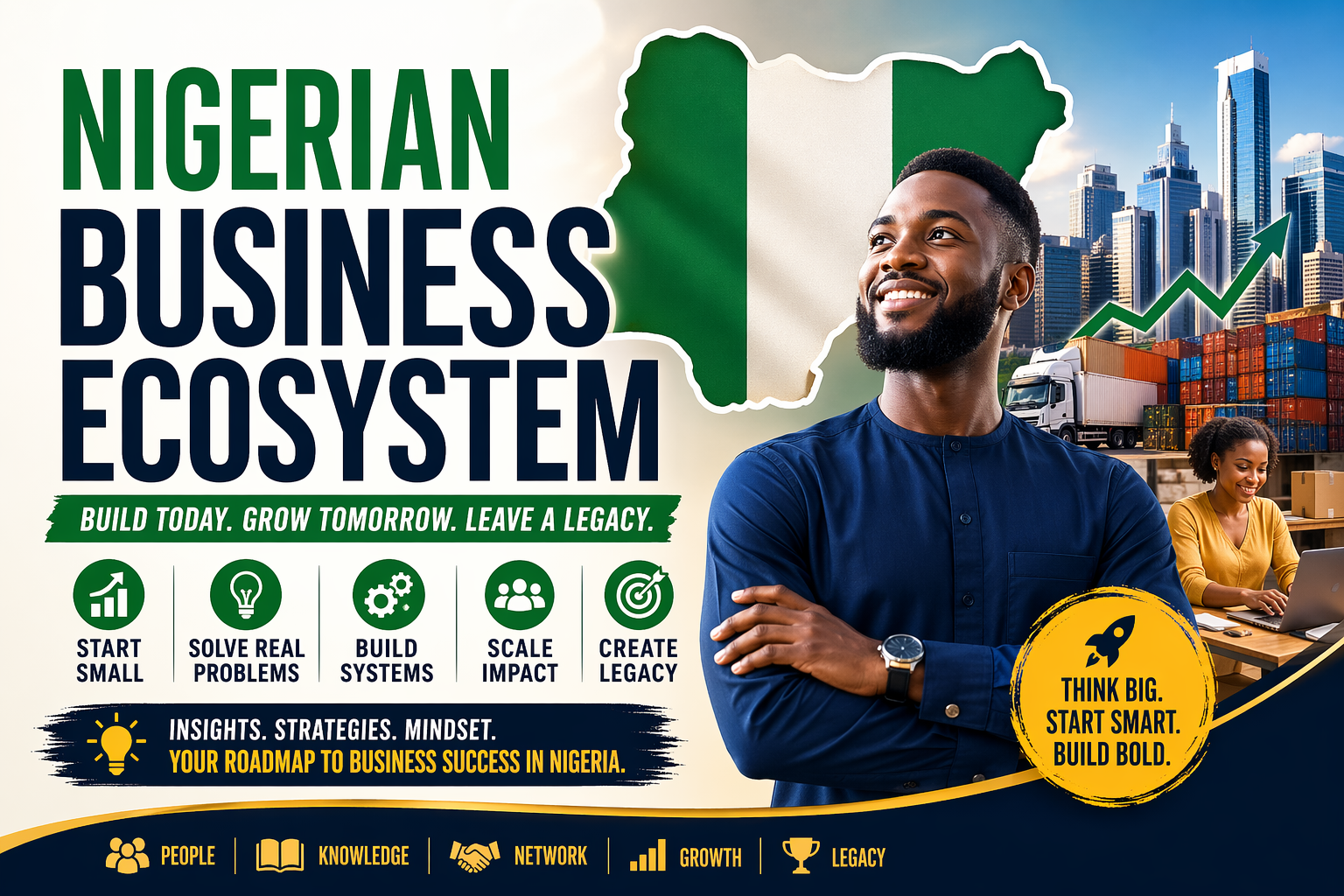
Nigeria is widely regarded as one of Africa’s most dynamic entrepreneurial environments. From roadside vendors to fast-growing tech startups, the country is filled with individuals pursuing economic opportunity through business.
However, beneath this vibrancy lies a critical reality: many businesses fail within their early years.
The difference between those that survive and those that collapse is not luck—it is understanding the business ecosystem, applying structure, and building with long-term vision.
This article provides a practical breakdown of the Nigerian business ecosystem and how entrepreneurs can navigate it successfully.
What is a Business?
A business is not just the act of buying and selling goods or services.
A true business is:
An organized system designed to create, deliver, and sustain value over time.
To fully understand business, three core pillars must be considered:
1. Longevity
A real business is designed to outlive the founder’s daily involvement.
If a business cannot operate without the owner, it is not yet a business—it is a job.
2. Structure
Structure introduces order, consistency, and scalability.
This includes:
- Defined roles
- Financial systems
- Customer management processes
- Operational workflows
Without structure, growth becomes chaotic and unsustainable.
3. Legacy
Legacy focuses on long-term impact and continuity.
Businesses that prioritize legacy build:
- Strong brands
- Institutional systems
- Generational value
Stages of Business in Nigeria
Understanding the different stages of business helps entrepreneurs identify where they are and what is required to grow.
1. Nano Businesses
These are the smallest forms of business activity.
Characteristics:
- One-person operations
- Minimal capital
- Informal structure
Examples include freelancers and small online vendors.
2. Petty Trading
This stage involves daily buying and selling for small profits.
Characteristics:
- Cash-based transactions
- High dependency on physical presence
- Low scalability
3. Small Businesses
At this stage, some level of structure begins to emerge.
Characteristics:
- Registered business name
- Small team
- Defined products or services
4. Medium Businesses
Medium businesses operate with clear systems and organizational structure.
Characteristics:
- Departments and management teams
- Stronger market presence
- Increased revenue capacity
5. Large Corporations
These are highly structured organizations with large-scale operations.
Characteristics:
- Corporate governance systems
- National or international reach
- Significant economic impact
Challenges of Starting a Business in Nigeria
Entrepreneurship in Nigeria is filled with opportunity—but also significant obstacles.
1. Limited Access to Capital
Many entrepreneurs struggle with:
- Lack of funding
- High-interest loans
- Limited investor access
2. Infrastructure Deficiencies
Businesses face:
- Unstable electricity supply
- Poor transportation networks
- High logistics costs
- Internet reliability issues
3. Policy Instability
Frequent changes in government policies affect:
- Importation
- Taxation
- Foreign exchange
This makes long-term planning difficult.
4. Intense Market Competition
Entrepreneurs compete with:
- Informal traders
- Cheap imported goods
- Established brands
5. Lack of Business Education
Many startups fail due to poor knowledge of:
- Financial management
- Marketing
- Operations
- Customer acquisition
Secrets of Successful Startups in Nigeria
Despite the challenges, some businesses consistently succeed. Here’s why:
1. They Solve Real Problems
Customers pay for solutions—not ideas.
Winning businesses focus on:
- Convenience
- Cost reduction
- Time-saving solutions
- Lifestyle improvement
2. They Start Small and Scale Strategically
Successful entrepreneurs:
- Test ideas
- Learn quickly
- Adjust before expanding
3. They Understand Their Market
Market knowledge reduces risk.
This includes:
- Customer behavior
- Industry trends
- Competitive positioning
4. They Build Systems Early
Systems make scaling possible.
Examples include:
- Accounting systems
- CRM tools
- Standard operating procedures
5. They Leverage Networks
Opportunities often come through relationships.
Successful entrepreneurs build connections with:
- Mentors
- Investors
- Industry professionals
The Role of Incubation Programs
Startup incubation programs play a critical role in business success.
They help entrepreneurs move from idea to sustainable enterprise.
Key Benefits:
- Business Education: Learning how to build and manage a business
- Mentorship: Guidance from experienced professionals
- Funding Access: Connections to investors and grants
- Networking: Exposure to valuable business relationships
- Validation: Refining business models before scaling
The Winning Entrepreneurial Mindset
Success in business is largely psychological.
1. Resilience
Entrepreneurs must endure:
- Rejection
- Delays
- Uncertainty
2. Long-Term Thinking
Quick-profit thinking limits growth.
Sustainable entrepreneurs focus on:
- Reputation
- Systems
- Gradual scaling
3. Continuous Learning
Markets evolve constantly.
Entrepreneurs must stay updated on:
- Technology
- Consumer trends
- Industry shifts
4. Strategic Risk-Taking
Successful entrepreneurs take calculated risks, not emotional decisions.
The Role of Technology in Modern Business
Technology has transformed how businesses operate in Nigeria.
It enables:
- Digital marketing
- Online payments
- Automation
- Global reach
Businesses that ignore technology risk becoming irrelevant.
Financial Discipline: The Backbone of Sustainability
Many businesses fail not because they lack customers—but because they mismanage money.
Entrepreneurs must master:
- Budgeting
- Cost control
- Profit reinvestment
- Cash flow management
Branding and Market Positioning
Customers don’t just buy products—they buy brands.
Strong branding builds:
- Trust
- Recognition
- Customer loyalty
Ethical Entrepreneurship
Sustainable businesses are built on:
- Integrity
- Transparency
- Trust
Reputation is a long-term asset that must be protected.
Conclusion
The Nigerian business environment is both challenging and full of opportunity.
Entrepreneurs who succeed understand that:
- Business is a system, not a hustle
- Growth requires structure and discipline
- Sustainability requires long-term thinking
If you approach business with the right mindset, systems, and strategy, you can build something that not only generates profit—but creates lasting impact and legacy.
What Next?
At Jomo Resource Center, we equip entrepreneurs with the skills, structure, and strategy needed to succeed in today’s business environment.
Visit: jomorc.com
Join our training programs and start building a sustainable business today
Over to You
Let’s make this interactive.
What insight did you gain from this post? Share your thoughts in the comments—someone else might learn from you too.