

The Social Media Scam Epidemic: Common Social Media Scams and How to Avoid Them

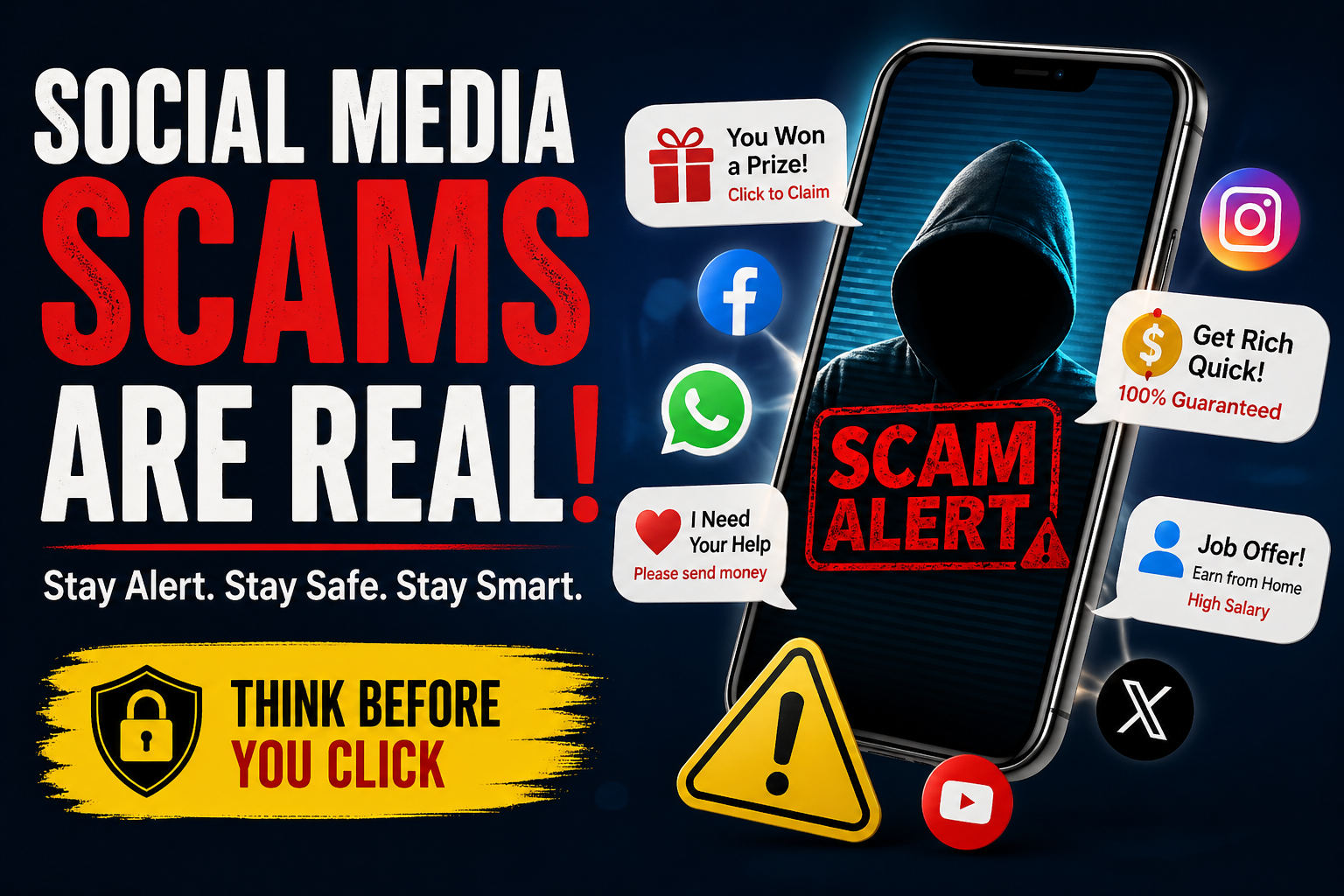
Social media has transformed how we communicate, shop, network, learn, and build relationships. From reconnecting with old friends to running businesses online, platforms like Facebook, Instagram, TikTok, X, LinkedIn, and WhatsApp have become part of everyday life.
But behind the convenience and entertainment lies a growing digital threat.
Social media scams and online fraud have become alarmingly common. Every day, millions of users are exposed to fake giveaways, romance scams, phishing links, impersonation schemes, fake investment opportunities, and fraudulent online stores. Some victims lose money. Others lose access to their accounts, private information, or even their peace of mind.
What makes these scams dangerous is that they often look real. Scammers are becoming smarter, more convincing, and increasingly sophisticated. They exploit trust, emotions, urgency, and curiosity to manipulate unsuspecting users.
The frightening truth is this: anyone can become a target.
Whether you are a student looking for a job, a business owner trying to grow online, or simply someone scrolling through social media after work, scammers are constantly searching for opportunities to deceive people.
This article will expose the most common social media scams, explain how they work, reveal the warning signs users should watch for, and provide practical internet safety tips to help you stay protected online.
Why Social Media Is a Perfect Environment for Scammers
Social media platforms offer scammers exactly what they need: access, anonymity, and opportunity.
1. Easy Access to Millions of Potential Victims
Scammers no longer need sophisticated hacking tools to find targets. Social media gives them direct access to millions of users across the world.
A single fake account can message hundreds of people within minutes.
2. Fake Identities Are Easy to Create
Creating fake social media accounts takes only a few minutes. Fraudsters often steal profile pictures, pretend to be celebrities, business owners, recruiters, or even friends and relatives.
Many users assume that a professional-looking profile must be genuine, which makes impersonation scams highly effective.
3. Emotional Manipulation Works Fast Online
Social media is emotional by nature. People share personal struggles, celebrations, relationships, financial goals, and daily experiences openly.
Scammers exploit emotions such as:
- Fear
- Loneliness
- Excitement
- Desperation
- Sympathy
- Greed
- Curiosity
When emotions are triggered, people tend to make quick decisions without careful verification.
4. Viral Sharing Helps Scams Spread Quickly
A fake giveaway post can be shared thousands of times within hours. Fraudulent investment schemes spread rapidly through reposts, comments, and private messages.
Scammers understand how viral content works and use it to their advantage.
5. Many Users Lack Digital Awareness
Unfortunately, many internet users still struggle to identify online scam warning signs. Some people are unaware of phishing tactics, fake login pages, or AI-generated scams.
This lack of awareness creates a perfect environment for online fraud.
Common Types of Social Media Scams
1. Fake Giveaways and Promotions
One of the most common social media scams involves fake giveaways.
Scammers pretend to represent popular brands, influencers, or celebrities and claim users can win phones, laptops, cash prizes, or luxury items.
How It Works
Victims are asked to:
- Click suspicious links
- Share personal information
- Pay a “processing fee”
- Enter login credentials
- Share OTP codes
Common Tactics
- “Congratulations! You’ve won an iPhone.”
- “Claim your reward now.”
- Fake comments from supposed winners
- Countdown timers creating urgency
Warning Signs
- Poorly designed pages
- Suspicious URLs
- Requests for payment before receiving prizes
- Newly created accounts
- Unrealistic offers
If it sounds too good to be true, it probably is.
2. Investment and Cryptocurrency Scams
Investment scams have exploded on social media, especially those involving cryptocurrency and forex trading.
Scammers promise unrealistic returns such as:
- “Double your money in 24 hours”
- “Guaranteed profits”
- “Risk-free investments”
How It Works
Fraudsters often use fake screenshots, edited videos, luxury lifestyles, and fake testimonials to appear credible.
Some even impersonate financial experts or successful entrepreneurs.
Common Tactics
- Fake trading platforms
- Ponzi schemes
- Referral-based systems
- Pressure to invest immediately
Warning Signs
- Guaranteed profits
- Lack of transparency
- No legal registration
- Pressure to recruit others
- Fake celebrity endorsements
Legitimate investments always involve risk.
3. Romance and Relationship Scams
Romance scams are emotionally devastating because they exploit human connection and trust.
How It Works
Scammers create fake profiles using attractive photos and begin online relationships with victims. Over time, they build emotional attachment before requesting money.
Common excuses include:
- Medical emergencies
- Travel expenses
- Family crises
- Business problems
Common Tactics
- Excessive affection very early
- Avoiding video calls
- Refusing in-person meetings
- Emotional manipulation
Warning Signs
- Fast declarations of love
- Inconsistent stories
- Requests for money
- Stolen profile photos
- Excuses for avoiding verification
4. Fake Job and Remote Work Scams
As remote work becomes more popular, scammers are targeting job seekers aggressively.
How It Works
Victims receive offers for fake jobs promising high salaries for little work.
Applicants may be asked to:
- Pay registration fees
- Buy training materials
- Submit sensitive personal data
Common Tactics
- “Earn thousands weekly from home”
- Fake recruiter profiles
- Unrealistic salaries
- Urgent hiring messages
Warning Signs
- Upfront payment requests
- No official company website
- Generic email addresses
- Poor interview process
Legitimate employers do not charge people to get jobs.
5. Account Impersonation Scams
In this scam, fraudsters clone or impersonate real accounts.
How It Works
Scammers copy profile photos, names, and public information to create duplicate accounts.
They then message friends and followers pretending to be the original person.
Common Tactics
- Requests for emergency money
- Fake investment recommendations
- Fake charity appeals
Warning Signs
- Duplicate friend requests
- Strange writing style
- Sudden financial requests
- Newly created duplicate profiles
Always verify suspicious requests independently.
6. Phishing Links and Fake Login Pages
Phishing remains one of the most dangerous forms of online fraud.
How It Works
Scammers send links pretending to be from legitimate platforms like Facebook, Instagram, banks, or email providers.
Victims are tricked into entering usernames and passwords on fake websites.
Common Tactics
- “Your account will be suspended.”
- “Verify your account immediately.”
- Fake security alerts
Warning Signs
- Misspelled URLs
- Suspicious links
- Requests for login credentials
- Poor website design
Never log in through suspicious links.
7. Online Shopping and Fake Vendor Scams
Social media marketplaces have created opportunities for fake vendors.
How It Works
Scammers advertise attractive products at unbelievably cheap prices.
After payment, victims either receive fake items or nothing at all.
Common Tactics
- Stolen product photos
- Fake customer reviews
- Limited-time discounts
- Disabling comments on posts
Warning Signs
- Prices far below market value
- No verified reviews
- No physical address
- Poor customer communication
Always research sellers before making payments.
8. Charity and Emergency Scams
Scammers often exploit public sympathy during crises.
How It Works
Fraudsters create fake fundraising campaigns for:
- Medical emergencies
- Natural disasters
- Orphanages
- Accident victims
Common Tactics
- Emotional images and stories
- Pressure to donate quickly
- Fake payment accounts
Warning Signs
- No verifiable information
- Emotional pressure
- Lack of transparency
- Newly created fundraising pages
Verify charitable causes independently before donating.
9. AI-Generated Scams and Deepfake Impersonation
Artificial Intelligence has introduced a new wave of sophisticated scams.
How It Works
Scammers now use AI-generated voices, videos, and images to impersonate real people.
Victims may receive:
- Fake video endorsements
- Deepfake celebrity promotions
- AI-generated voice calls
- Realistic fake business messages
Common Tactics
- Fake investment promotions
- AI-generated customer testimonials
- Voice cloning
Warning Signs
- Unnatural speech patterns
- Slightly distorted visuals
- Strange facial movements
- Unverified announcements
As AI technology advances, digital skepticism becomes more important than ever.
Major Warning Signs of a Social Media Scam
Here are some common online scam warning signs users should never ignore:
Quick Safety Checklist
✔ Offers that seem too good to be true
✔ Urgent pressure to act immediately
✔ Requests for OTPs, passwords, or PINs
✔ Requests for upfront payments
✔ Suspicious or shortened links
✔ Poor grammar and inconsistent information
✔ Newly created or suspicious accounts
✔ Emotional manipulation tactics
✔ Fake testimonials or edited screenshots
✔ Requests to move conversations off-platform quickly
If multiple warning signs appear together, treat the situation cautiously.
Why So Many People Fall Victim
Many people assume only “careless” individuals fall for scams. That is not true.
Scammers are skilled manipulators who understand human psychology extremely well.
Trust
People naturally trust recommendations from friends, influencers, and familiar brands.
Greed
Promises of easy money or huge profits can cloud judgment.
Desperation
Financial hardship and unemployment make fake job offers and investment scams more tempting.
Loneliness
Romance scammers target emotional vulnerability and companionship needs.
Fear
Urgent security warnings create panic and rushed decisions.
Lack of Awareness
Many users simply do not know how modern online scams operate.
The reality is that scammers are professionals at deception.
How Users Can Protect Themselves Online
Staying safe online requires awareness, caution, and smart digital habits.
Enable Two-Factor Authentication (2FA)
Two-factor authentication adds an extra layer of protection to your accounts.
Even if your password is stolen, attackers may still be blocked.
Verify Identities Independently
If someone requests money or sensitive information, verify through another channel.
Call the person directly if possible.
Avoid Clicking Suspicious Links
Never click unfamiliar links sent through messages, emails, or comments.
Always inspect URLs carefully.
Never Share Passwords or OTPs
No legitimate company or platform will ask for your password or OTP code.
Research Investment Opportunities
Before investing:
- Check reviews
- Verify registration
- Research the company
- Look for independent information
Check Reviews Before Buying Online
Before purchasing from social media vendors:
- Read customer reviews
- Search for complaints
- Verify business information
Use Secure Payment Methods
Avoid direct transfers to unknown individuals whenever possible.
Use platforms with buyer protection.
Report Suspicious Accounts
Reporting fake social media accounts helps protect others from becoming victims.
Keep Devices and Apps Updated
Software updates often include important security improvements.
Limit Sharing Sensitive Information
Avoid oversharing details like:
- Home addresses
- Financial information
- Travel plans
- Identification documents
The less scammers know about you, the safer you are.
What To Do If You’ve Already Been Scammed
If you have fallen victim to online fraud, act quickly.
1. Stop Communication Immediately
Do not continue engaging with the scammer.
2. Change Your Passwords
Update passwords for:
- Email accounts
- Banking apps
- Social media platforms
Enable two-factor authentication immediately.
3. Contact Your Bank or Payment Provider
Report unauthorized transactions as quickly as possible.
You may be able to reverse or block payments.
4. Report the Scam Account
Use the reporting tools provided by the social media platform.
5. Gather Evidence
Take screenshots of:
- Conversations
- Payment receipts
- Profiles
- Emails
- Links
Evidence may help investigations.
6. Warn Friends and Family
Scammers may target people in your network next.
7. Report to Cybercrime Authorities
Depending on your country, report incidents to:
- Cybercrime agencies
- Consumer protection organizations
- Law enforcement
Reporting scams helps authorities track fraud patterns.
The Responsibility of Social Media Platforms
While users must stay vigilant, social media platforms also have major responsibilities.
Weak Moderation Systems
Many fake accounts remain active despite repeated reports.
Rise of Fake Accounts
Platforms need stronger identity verification systems to reduce impersonation and bot activity.
Better Scam Detection
AI tools should be used more effectively to identify fraudulent behavior early.
Digital Literacy Campaigns
Social media companies should invest more in public education about internet safety and online fraud prevention.
Protecting users should not be optional.
Conclusion
Social media has connected the world in powerful ways, but it has also opened the door to an epidemic of scams and online fraud.
From fake giveaways and phishing links to romance scams and AI-generated impersonation, digital criminals are constantly evolving their tactics. The best defense is awareness.
Learning how to identify online scam warning signs, verify information, and practice safe online habits can dramatically reduce your risk of becoming a victim.
Remember this: scammers thrive when people act emotionally, quickly, or carelessly.
Take your time. Verify information. Stay skeptical of unrealistic offers. Protect your accounts. Educate others.
In today’s digital world, awareness is one of the strongest forms of protection.
Let’s Talk
Have you or someone you know ever encountered a social media scam or online fraud attempt?
What happened, and what lessons did you learn from the experience?
Share your experience in the comments section below. Your story could help someone else recognize the warning signs early and avoid becoming the next victim.
Let’s help create a safer internet together.