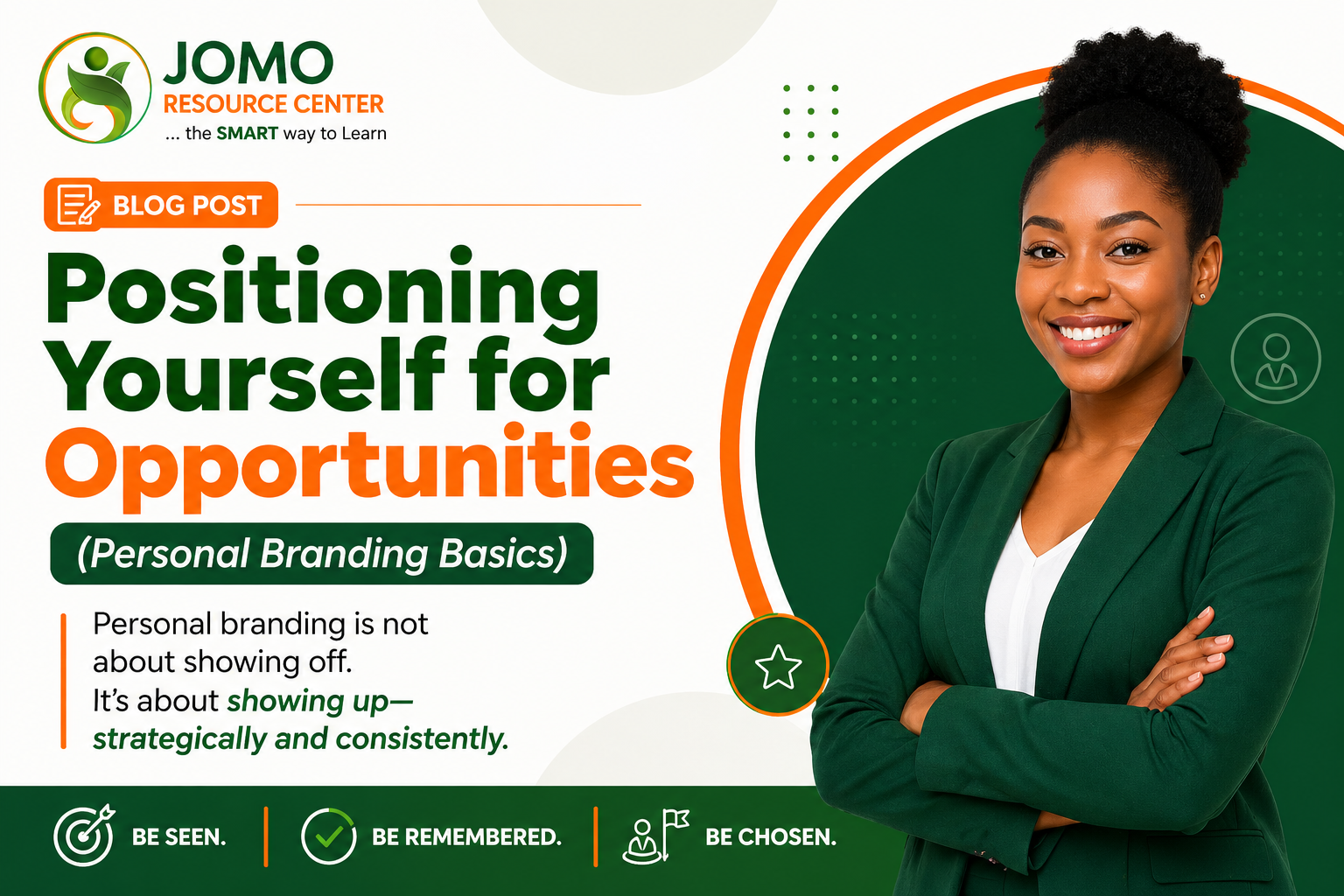
Positioning Yourself for Opportunities (Personal Branding Basics)

Why do some people seem to attract opportunities effortlessly while others—equally qualified—remain unnoticed?
It’s not always about who is the most skilled. Often, it’s about who is the most visible, clear, and memorable.
In today’s fast-moving, opportunity-driven world, being good at what you do is no longer enough. If people don’t know what you do or remember you for it, opportunities will pass you by.
This is where personal branding comes in.
Personal branding is the deliberate effort to shape how people perceive you professionally. When done right, it positions you for opportunities—jobs, partnerships, clients, and growth—without constantly chasing them.
In this article, you’ll learn how to build your personal brand, increase your career visibility, and position yourself strategically for opportunities both in Nigeria and globally.
What is Personal Branding?
Personal branding is the process of defining and promoting what you stand for—your skills, values, strengths, and unique perspective.
It answers three key questions:
- Who are you?
- What do you do?
- Why should people care?
Think of it this way: if someone mentions your name in a room full of opportunities, what comes to mind?
In today’s digital world—where platforms like LinkedIn, X (Twitter), and Instagram influence professional perception—your personal brand often speaks before you do.
Why It Matters
- Recruiters search online before hiring
- Clients check credibility before paying
- Collaborators assess alignment before partnering
If your online and offline presence doesn’t communicate your value clearly, you risk being overlooked.
Why Positioning Matters More Than Qualifications
Many people assume that degrees, certifications, or years of experience automatically lead to opportunities.
That’s not always true.
Perception often beats qualification.
Two candidates may have similar skills, but the one who:
- communicates clearly,
- shows their work publicly, and
- is known for something specific
will almost always get the opportunity.
Real-World Example
In Nigeria’s tech ecosystem, many self-taught developers land high-paying roles—not because they have the best degrees, but because:
- they share projects on GitHub,
- post insights on LinkedIn,
- and engage with tech communities.
Meanwhile, someone with a formal degree but no visible presence struggles to get noticed.
Lesson: Skills get you qualified. Positioning gets you selected.
The 5 Core Elements of a Strong Personal Brand
1. Clarity (Who You Are and What You Stand For)
If your message is unclear, your audience will ignore you.
You need to define:
- Your niche or area of focus
- Your strengths
- The problems you solve
Actionable Tips:
- Write a simple personal brand statement:
“I help [target audience] achieve [result] using [skill].” - Avoid being “everything to everyone”
- Focus on one or two core areas
Example:
Instead of saying “I am a marketer,” say:
“I help small businesses grow through digital marketing strategies.”
2. Visibility (Being Seen Consistently)
You cannot attract opportunities if people don’t see you.
Visibility is about showing up consistently in relevant spaces.
Actionable Tips:
- Post insights or lessons from your work weekly
- Share your learning journey
- Comment on industry-related posts
- Attend events, webinars, and workshops
Consistency matters more than perfection.
3. Credibility (Proof of Competence)
People trust evidence, not claims.
Your brand must show proof that you can deliver results.
Actionable Tips:
- Share past projects or case studies
- Highlight measurable results (e.g., “increased sales by 30%”)
- Collect testimonials from clients or supervisors
- Display certifications and achievements
In simple terms: Don’t just say it—show it.
4. Consistency (Unified Message Across Platforms)
Your message, tone, and identity should align across all platforms.
If your LinkedIn profile says one thing and your Instagram shows another, it creates confusion.
Actionable Tips:
- Use the same professional photo across platforms
- Align your bio and messaging
- Stick to your niche when creating content
- Maintain a consistent tone and style
Consistency builds recognition—and recognition builds trust.
5. Value (What You Offer to Others)
A strong personal brand is not self-centered—it’s value-driven.
Ask yourself: What do people gain from following or connecting with me?
Actionable Tips:
- Share tips, insights, and lessons
- Solve common problems in your field
- Educate, inspire, or inform your audience
- Focus on impact, not just visibility
When you consistently provide value, people begin to associate you with expertise.
Practical Steps to Start Building Your Personal Brand Today
You don’t need to wait until you’re “perfect” to start.
Here are practical steps you can implement immediately:
1. Optimize Your LinkedIn Profile
- Use a clear professional photo
- Write a strong headline (not just your job title)
- Add a compelling summary about what you do
- Highlight skills, experiences, and achievements
2. Start Creating and Sharing Content
- Share what you’re learning
- Break down complex ideas into simple posts
- Tell stories from your journey
- Post consistently (2–3 times weekly is enough)
3. Showcase Your Work
- Build a simple portfolio (even a Google Drive or Notion page works)
- Include:
- Projects
- Case studies
- Results
4. Engage in Relevant Communities
- Join industry groups
- Participate in discussions
- Attend local and virtual events
In Nigeria, communities (tech hubs, business groups, professional networks) are powerful for visibility.
5. Leverage Social Proof
- Ask for testimonials from:
- Clients
- Colleagues
- Mentors
- Display endorsements publicly
- Share success stories
Social proof builds trust faster than self-promotion.
Common Personal Branding Mistakes to Avoid
Even with good intentions, many people get personal branding wrong.
Here are common pitfalls:
1. Trying to Appeal to Everyone
You end up appealing to no one. Focus on a specific audience.
2. Being Inconsistent
Posting once in a while won’t build visibility. Consistency is key.
3. Over-Promotion Without Value
If all you do is “sell yourself,” people lose interest. Provide value first.
4. Ignoring Online Presence
In today’s world, no online presence equals missed opportunities.
5. Copying Others Without Authenticity
Inspiration is fine, but your uniqueness is your advantage.
6. Waiting Until You’re “Perfect”
You don’t need to know everything to start. Growth happens in public.
Real-Life Example or Case Study
Consider a young Nigerian graduate who studied accounting but struggled to get a job.
Instead of waiting endlessly, she:
- started sharing simple financial tips on LinkedIn,
- created content explaining budgeting and saving,
- volunteered to manage finances for small businesses,
- documented her work and results.
Within months:
- her posts gained traction,
- she attracted freelance clients,
- and eventually secured a full-time role.
What changed?
Not her qualification—but her positioning.
She became known for something specific, visible, and valuable.
Finally,
Opportunities rarely go to the most qualified person in the room—they go to the most visible, credible, and well-positioned.
Personal branding is not about showing off. It’s about showing up—strategically and consistently.
If you want to stand out professionally, you must:
- define your message,
- share your value,
- and position yourself where opportunities can find you.
Start Today:
- Update your profile
- Share your first post
- Showcase one project
- Engage with your industry
You don’t need to be perfect. You just need to be intentional.
Because in the end, your personal brand is what people say about you when you’re not in the room—and what opportunities come your way because of it.
Over to You
If you found this helpful, don’t leave without sharing your thoughts.
What’s one key lesson you’re taking away from this post? Drop it in the comments below.