

Why Most Nigerians Struggle to Monetize Their Skills

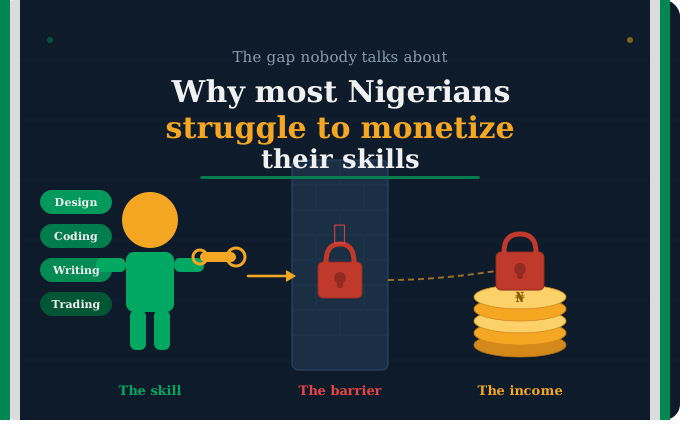
Nigeria is filled with talent: writers, designers, developers, marketers, artisans. Yet, many skilled people remain underpaid, overlooked, or stuck without steady income.
The problem is rarely a lack of skill. It’s a gap between having a skill and turning that skill into consistent income.
1. Skill Without Market Awareness
Many people focus on learning what they like, not what the market needs.
You can be highly skilled, but if your skill doesn’t solve a clear problem people are willing to pay for, monetization becomes difficult. For example, knowing basic graphic design isn’t enough if you can’t create designs that help businesses attract customers or increase sales.
Monetization starts with understanding:
- Who needs your skill
- What problem you solve
- Why they should pay you
Without this clarity, your skill remains a hobby instead of a business.
2. Poor Positioning and Personal Branding
A lot of Nigerians are skilled but invisible.
Clients don’t just pay for skill—they pay for perceived value. If your online presence doesn’t clearly communicate what you do and who you help, you’ll struggle to attract opportunities.
Many people:
- Don’t showcase their work
- Don’t define a niche
- Don’t communicate results
If people can’t quickly understand your value, they move on.
3. Pricing Fear and Undervaluation
There’s a widespread fear of charging “too much.”
As a result, many skilled individuals:
- Underprice their services
- Accept low-paying gigs
- Compete only on price
This creates a race to the bottom. Instead of positioning themselves as problem-solvers, they position themselves as “cheap options.”
The irony? Low pricing often attracts the worst clients and limits growth.
4. Lack of Sales and Marketing Skills
Knowing how to do the work is different from knowing how to sell the work.
Many people struggle with:
- Pitching their services
- Writing persuasive proposals
- Closing deals
Without basic sales skills, even highly talented individuals remain broke.
This is where fields like Copywriting and digital marketing become essential, not optional.
5. Inconsistency and Lack of Discipline
Monetizing a skill requires consistent effort, building a portfolio, reaching out to clients, improving your craft.
But many people:
- Post once and disappear
- Give up after a few rejections
- Wait for opportunities instead of creating them
Consistency is what turns effort into income. Without it, growth stalls.
6. Dependence on a Single Platform
Some rely entirely on one platform maybe WhatsApp status or a single freelance site.
This is risky.
If that platform isn’t bringing visibility or shuts down your reach, your income stops. Successful people diversify:
- Social media platforms
- Direct outreach
- Referrals
- Personal websites
More channels mean more opportunities.
7. Lack of Structure and Business Thinking
Many treat their skill casually, not like a business.
They don’t:
- Define services clearly
- Create packages
- Set income goals
- Track performance
Without structure, income becomes random and unpredictable.
Monetization requires a shift from “I have a skill” to “I run a service business.”
8. Limited Access to the Right Audience
Sometimes the issue isn’t skill, it is environment.
If you’re surrounded by people who don’t value or need your skill, selling becomes harder. For instance, high-paying clients for tech, writing, or design often exist outside your immediate circle.
This is why many successful Nigerians target global markets using platforms like LinkedIn, freelance sites, or personal branding.
9. Impatience and Short-Term Thinking
Many expect quick results.
When money doesn’t come immediately, they:
- Switch skills
- Lose focus
- Quit entirely
But monetizing a skill is a long-term game. It takes time to build credibility, trust, and demand.
10. No Clear Value Proposition
A common mistake is being too generic.
“I’m a writer” or “I’m a designer” is not enough.
Clients want specificity:
- What kind of writing?
- What results do you deliver?
- Who do you help?
Clarity attracts clients. Vagueness repels them.
Final Thought
The struggle to monetize skills in Nigeria is not just about talent—it’s about strategy, visibility, and consistency.
When you understand the market, position yourself clearly, learn how to sell, and stay consistent, your skill becomes more than an ability, it becomes an income stream.
Skill is the foundation.
But monetization is a system.
Over to You
Found this inspiring? I’d love to hear from you.
What’s one thing you learned from this post? Share it in the comments below.