Using AI Tools for Smarter CVs & Job Applications

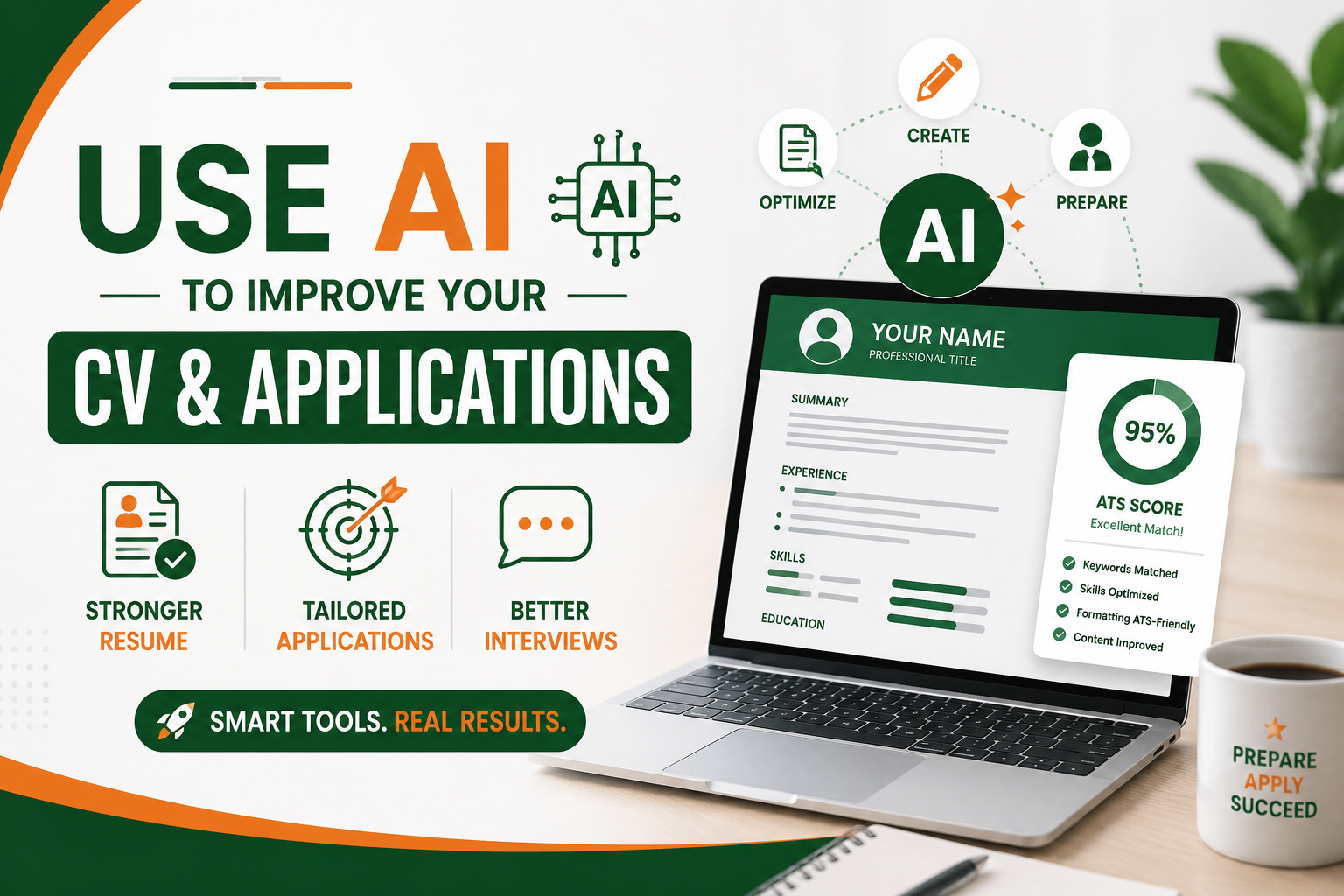
The modern hiring process has changed dramatically. In many companies today, your CV may be reviewed by software before a human recruiter ever sees it. Recruiters are handling hundreds — sometimes thousands — of applications per role, while job seekers face increasing competition from both local and global talent pools.
At the same time, artificial intelligence is reshaping recruitment on both sides of the hiring process. Employers use AI-powered Applicant Tracking Systems (ATS), resume scanners, and recruitment automation tools to filter candidates faster. Meanwhile, job seekers now have access to powerful AI tools for CV improvement that can help optimize resumes, strengthen cover letters, prepare for interviews, and improve overall job application performance.
But there’s an important distinction: using AI strategically is very different from relying on AI blindly.
The candidates getting the best results today are not the ones copying generic AI-generated resumes. They are the professionals using AI to enhance clarity, positioning, personalization, and confidence while still sounding authentically human.
In this guide, you’ll learn exactly how to use AI effectively during your job search without sounding robotic, dishonest, or overly automated.
Why AI Is Changing the Job Application Process
The Rise of ATS Resume Screening
Most medium-sized and large companies now use Applicant Tracking Systems (ATS) to manage applications. These systems scan resumes for:
- Keywords
- Relevant skills
- Job titles
- Years of experience
- Industry terminology
- Certifications
- Formatting compatibility
This means even highly qualified candidates can be filtered out if their resumes are not properly optimized.
That’s why ATS resume optimization has become one of the most important aspects of modern job searching.
Recruiters Are Overwhelmed
Recruiters today work under intense pressure. Many recruiters spend only a few seconds during the first review of a CV. AI helps them automate repetitive tasks like:
- Candidate screening
- Resume ranking
- Skill matching
- Interview scheduling
- Candidate sourcing
As hiring becomes faster, applicants must become smarter.
Competition Is Global
Remote work has expanded the talent market. A role posted in Lagos, London, or Toronto may now receive applications from candidates worldwide.
This increased competition means your application must be:
- Clear
- Targeted
- Well-written
- Keyword-optimized
- Professionally presented
This is where AI tools for job seekers can provide a major advantage.
What AI Tools Can Actually Help With
Many people assume AI only writes resumes. In reality, modern AI career tools can support almost every stage of the job search process.
Resume Writing and Optimization
AI can help:
- Rewrite weak bullet points
- Improve professional summaries
- Quantify achievements
- Identify missing keywords
- Improve structure and readability
Cover Letter Generation
An effective AI cover letter generator can:
- Create first drafts quickly
- Match tone to company culture
- Personalize applications
- Reduce repetitive writing
Grammar and Clarity Improvement
AI writing assistants help eliminate:
- Typos
- Grammar issues
- Repetitive phrases
- Awkward wording
- Unclear sentences
LinkedIn Profile Enhancement
AI can improve:
- Headlines
- About sections
- Skills positioning
- Profile summaries
- Networking messages
Interview Preparation
AI interview tools can simulate:
- Mock interviews
- Behavioral questions
- STAR method responses
- Salary negotiation conversations
Job Matching and Career Planning
Some AI job search tools analyze:
- Your experience
- Your skills
- Industry trends
- Suitable roles
- Skill gaps
This helps candidates apply more strategically instead of randomly sending applications everywhere.
Best AI Tools for CV and Job Application Improvement
Here are some of the most effective AI resume tools available today.
1. OpenAI ChatGPT
Main Purpose
Content generation, resume rewriting, interview preparation, and application support.
Key Strengths
- Excellent for brainstorming
- Improves achievement statements
- Creates tailored resume summaries
- Helps draft cover letters
- Generates interview practice questions
Best Use Case
Candidates who want flexible, customizable support.
Limitations
- Requires good prompts
- Can sound generic if not edited
- May invent details if users are careless
2. Grammarly
Main Purpose
Grammar, tone, and clarity improvement.
Key Strengths
- Polishes professional writing
- Improves sentence flow
- Detects awkward phrasing
- Enhances readability
Best Use Case
Final editing before submission.
Limitations
- Does not deeply optimize resumes for ATS
- Suggestions can sometimes over-formalize writing
3. Canva
Main Purpose
Resume design and formatting.
Key Strengths
- Easy-to-use templates
- Visually appealing resumes
- Beginner-friendly
Best Use Case
Creative professionals and modern resume layouts.
Limitations
- Some templates are not ATS-friendly
- Over-designed resumes can hurt readability
4. Teal
Main Purpose
Resume tailoring and job tracking.
Key Strengths
- Tracks job applications
- Matches resumes to job descriptions
- Keyword optimization support
Best Use Case
Organized job seekers applying to multiple roles.
Limitations
- Learning curve for beginners
- Some features require paid plans
5. Kickresume
Main Purpose
Resume and cover letter creation.
Key Strengths
- Professional templates
- AI-assisted writing
- Quick setup
Best Use Case
Fresh graduates and career changers.
Limitations
- AI-generated content may sound repetitive
- Requires personalization
6. Resume Worded
Main Purpose
Resume scoring and LinkedIn optimization.
Key Strengths
- ATS-focused analysis
- Clear improvement suggestions
- Helpful keyword insights
Best Use Case
Improving resume competitiveness.
Limitations
- Can encourage over-optimization
- Some scoring metrics are imperfect
7. LinkedIn AI Tools
Main Purpose
Profile optimization and networking support.
Key Strengths
- AI-powered profile suggestions
- Skill recommendations
- Networking assistance
Best Use Case
Professionals building online visibility.
Limitations
- Generic suggestions if copied directly
- Requires strong personal branding
8. Jobscan
Main Purpose
ATS resume optimization.
Key Strengths
- Keyword analysis
- Resume matching
- ATS compatibility checks
Best Use Case
Tailoring resumes for specific roles.
Limitations
- Over-optimization can reduce readability
- Not a substitute for strong experience
9. Rezi
Main Purpose
ATS-friendly resume creation.
Key Strengths
- Clean ATS formatting
- Keyword optimization
- Structured templates
Best Use Case
Corporate and professional roles.
Limitations
- Less visually creative
- May require manual adjustments
How to Use AI to Improve Your CV Strategically
Using AI effectively requires strategy, not automation.
Step 1: Tailor Your Resume to Each Job Description
One of the biggest mistakes job seekers make is sending the same CV everywhere.
Instead:
- Copy the job description
- Paste it into an AI tool
- Ask the AI to identify:
- Required skills
- Key responsibilities
- Important keywords
- Core competencies
Then update your CV naturally.
Example Prompt
“Analyze this job description and identify the top 10 keywords and skills I should reflect naturally in my resume.”
This is one of the smartest ways to improve CV with AI.
Step 2: Improve Achievement Statements
Weak:
- Responsible for managing social media
Better:
- Managed multi-platform social media campaigns that increased engagement by 45% within six months
AI can help transform vague duties into measurable achievements.
Step 3: Optimize for ATS Systems
ATS-friendly resumes should:
- Use standard headings
- Avoid graphics-heavy layouts
- Include relevant keywords
- Use simple formatting
- Maintain consistent structure
ATS-Friendly Headings
- Professional Summary
- Work Experience
- Skills
- Education
- Certifications
Step 4: Strengthen Your Professional Summary
Many summaries are too generic.
AI can help create:
- Industry-specific positioning
- Clear value propositions
- Stronger career branding
Example:
“Results-driven digital marketing specialist with 5+ years of experience increasing online visibility, generating leads, and managing data-driven campaigns across multiple industries.”
Step 5: Improve Readability
Recruiters prefer resumes that are:
- Easy to scan
- Concise
- Organized
- Achievement-focused
AI can help shorten lengthy paragraphs while maintaining impact.
How to Use AI for Better Cover Letters
Cover letters still matter — especially for competitive roles.
However, generic AI-generated letters are easy to spot.
Use AI for Structure, Not Personality Replacement
AI should help:
- Organize ideas
- Improve clarity
- Match tone
- Save time
But your experiences and motivation should remain personal.
Customize Every Cover Letter
Use AI to tailor:
- Company references
- Role alignment
- Industry terminology
- Value proposition
Example Prompt
“Rewrite this cover letter to sound more confident, professional, and aligned with a remote customer service role.”
Avoid Generic Openings
Weak:
“I am writing to apply for this role.”
Better:
“After helping grow customer retention by 30% in my previous role, I became excited about opportunities where customer experience and relationship-building are highly valued.”
Using AI to Prepare for Interviews
Interview preparation is one of the most underrated uses of AI job search tools.
Practice Mock Interviews
AI can simulate:
- HR interviews
- Behavioral interviews
- Technical interviews
- Leadership interviews
Prepare STAR Responses
AI helps structure answers using:
- Situation
- Task
- Action
- Result
This improves clarity and confidence.
Build Confidence
Many candidates struggle because they:
- Overthink
- Ramble
- Lack structure
- Feel nervous
AI-powered practice sessions help candidates rehearse before real interviews.
Salary Negotiation Preparation
AI can help you:
- Practice negotiation scripts
- Research salary ranges
- Improve confidence in compensation discussions
Mistakes Job Seekers Make When Using AI
1. Copy-Pasting AI Content Blindly
Recruiters can often recognize generic AI writing.
Common signs include:
- Overly formal language
- Empty buzzwords
- Repetitive phrasing
- Lack of personality
2. Sounding Robotic
Your application should sound professional, not artificial.
Avoid:
- Excessive corporate jargon
- Overused phrases like:
- “Highly motivated”
- “Results-oriented professional”
- “Dynamic team player”
3. Including False Information
Never allow AI to invent:
- Skills
- Certifications
- Experience
- Achievements
Recruiters verify information.
4. Ignoring Personalization
Mass-generated applications rarely succeed.
Customization matters more than ever.
5. Depending Entirely on AI
AI is a support system — not a replacement for:
- Critical thinking
- Strategy
- Research
- Human communication
Ethical and Smart Use of AI in Job Applications
The smartest professionals use AI responsibly.
Maintain Authenticity
Your:
- Voice
- Experiences
- Achievements
- Career story
should remain genuine.
Always Edit AI Output
Never submit the first AI draft.
Review for:
- Accuracy
- Tone
- Clarity
- Personality
- Relevance
Fact-Check Everything
Even advanced AI systems can make mistakes.
Always verify:
- Dates
- Statistics
- Company names
- Technical information
How Recruiters Feel About AI-Generated Applications
Many recruiters are not against AI-assisted applications.
In fact, recruiters often appreciate:
- Cleaner resumes
- Better formatting
- Clearer communication
- Tailored applications
However, recruiters quickly notice when candidates rely too heavily on automation.
Red Flags Recruiters Notice
- Generic summaries
- Buzzword-heavy writing
- Lack of personalization
- Overly polished but empty content
- Identical cover letters
What Makes AI-Assisted Applications Stand Out Positively
- Clear achievements
- Strong personalization
- Human storytelling
- Specific examples
- Genuine motivation
The best applications combine AI efficiency with human authenticity.
Real-Life Example: How AI Helped a Candidate Land More Interviews
Consider Ada, a customer support professional struggling to get interview invitations despite applying for months.
Her original resume:
- Used vague descriptions
- Had poor formatting
- Lacked ATS keywords
- Included generic summaries
She started using:
- ChatGPT for rewriting achievements
- Jobscan for ATS optimization
- Grammarly for editing
- LinkedIn AI suggestions for profile improvement
Instead of sending one generic resume everywhere, she tailored each application.
Within six weeks:
- Her response rate improved significantly
- She secured multiple interview invitations
- Recruiters began reaching out directly on LinkedIn
The difference was not AI alone.
The difference was strategic use of AI combined with intentional personalization.
Expert Tips for Standing Out in the AI Era
Combine AI With Personal Branding
Your story matters.
Use AI to strengthen your communication — not erase your individuality.
Focus on Measurable Results
Recruiters remember impact.
Instead of:
- “Helped with marketing”
Say:
- “Contributed to campaigns that generated 120 qualified leads in three months.”
Keep Learning New Skills
AI tools evolve quickly.
Professionals who continuously adapt remain more competitive.
Build a Strong LinkedIn Presence
A strong LinkedIn profile increases visibility to recruiters.
Use AI to:
- Improve headlines
- Optimize summaries
- Create engaging posts
- Enhance networking messages
Apply Smarter, Not Harder
Sending 300 generic applications is less effective than sending 30 strategic applications.
AI can help improve efficiency — but strategy still wins.
Finally,
AI Should Enhance Your Job Search, Not Replace You
The rise of artificial intelligence has permanently changed recruitment and job searching. Today, candidates who understand how to use AI tools for CV improvement strategically have a clear advantage.
However, the goal is not to become robotic.
The goal is to:
- Communicate more clearly
- Present achievements more effectively
- Optimize applications intelligently
- Save time
- Improve confidence
The most successful job seekers use AI as a professional assistant — not as a replacement for authenticity, effort, or personal storytelling.
As competition increases in the modern job market, combining AI efficiency with genuine human value may become one of the most important career skills of this decade.
If used wisely, AI can help you move from ignored applications to meaningful interview opportunities faster than ever before.