

Engineering User Behavior: How to Make Readers Stay Longer, Engage More, and Keep Coming Back

Most blog posts fail—not because they lack good writing, but because they fail to hold attention.
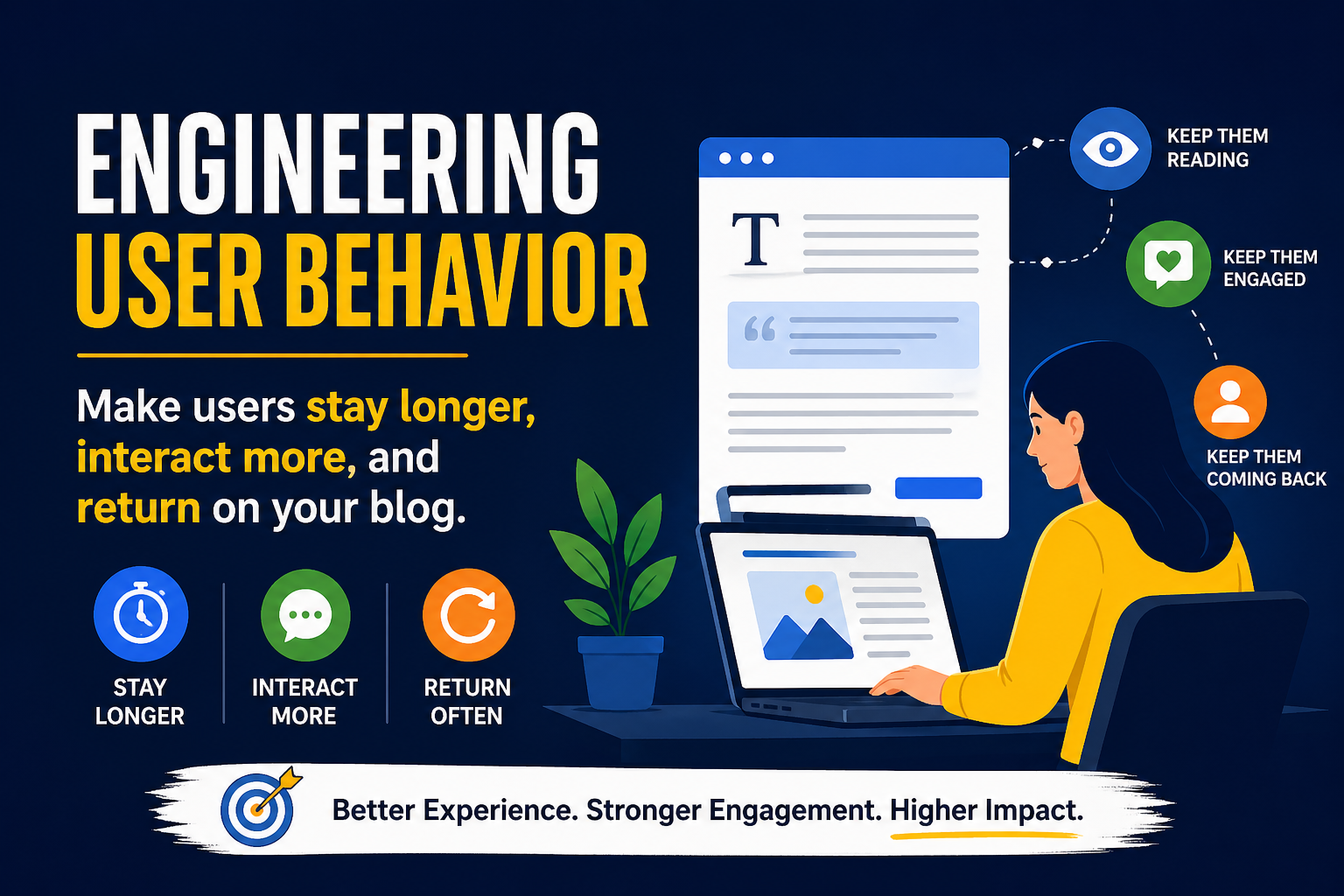
In today’s digital space, writing is no longer just about expressing ideas. It is about guiding reader behavior. When someone lands on your blog, three critical things must happen:
- They stay long enough to read
- They interact with your content
- They return for more
If these three things don’t happen, your content struggles—no matter how well-written it is.
This guide will show you, in clear and simple terms, how to intentionally design your blog posts to achieve exactly that.
What Does “Engineering User Behavior” Mean?
“Engineering user behavior” simply means:
Designing your content in a way that influences how readers act while reading it.
Instead of hoping readers will stay, scroll, or engage—you guide them deliberately.
Think of it like teaching:
A good teacher doesn’t just talk—they ask questions, give examples, pause, and keep students involved.
Your blog should work the same way.
1. Capture Attention Immediately (The First 10 Seconds Rule)
When someone clicks your blog post, they decide within seconds whether to stay or leave.
What to do:
- Start with a strong opening sentence
- Clearly state the problem you’re addressing
- Show the reader they are in the right place
Example:
Instead of:
“In this article, we will discuss user engagement…”
Write:
“Most people leave blog posts within 10 seconds. Here’s how to make them stay.”
Why this matters:
If your introduction is weak or slow, readers leave immediately—and they rarely come back.
2. Make Your Content Easy to Read (Structure Matters)
Many readers don’t read word-for-word—they scan.
What to do:
- Use short paragraphs (2–4 lines)
- Break content with headings (like this one)
- Use bullet points where necessary
- Avoid large blocks of text
Why this matters:
A well-structured post:
- Feels less overwhelming
- Keeps readers moving
- Increases how long they stay
Think of your content as a guided path, not a wall of text.
3. Keep Readers Curious (Don’t Say Everything at Once)
If readers feel they’ve gotten everything too quickly, they leave.
What to do:
- Introduce ideas gradually
- Hint at what’s coming next
- Use transitions like:
- “Here’s where it gets interesting…”
- “But that’s not the most important part…”
Why this matters:
Curiosity keeps readers scrolling.
When people feel there is more value ahead, they stay longer.
4. Encourage Interaction (Don’t Let Reading Be Passive)
A blog should not feel like a lecture—it should feel like a conversation.
What to do:
- Ask simple questions:
- “Have you ever experienced this?”
- “Which of these applies to you?”
- Encourage reflection
- Invite comments or opinions
Why this matters:
When readers engage mentally or emotionally, they:
- Stay longer
- Feel more connected
- Are more likely to return
5. Guide Readers to the Next Step (Internal Linking)
Don’t let your blog post be a dead end.
What to do:
- Link to other relevant articles on your blog
- Recommend “what to read next”
- Lead readers deeper into your content
Example:
“If you found this helpful, you’ll also benefit from our guide on writing high-converting headlines.”
Why this matters:
This increases:
- Time spent on your website
- Number of pages visited
- Overall engagement
6. Use Examples and Stories
People understand and remember stories better than explanations.
What to do:
- Add real-life examples
- Use simple analogies
- Show practical applications
Why this matters:
Examples:
- Make your content easier to understand
- Keep readers interested
- Build trust and credibility
7. Break the Pattern (Keep It Visually Interesting)
Reading the same type of text continuously can become tiring.
What to do:
- Use bold text for emphasis
- Add quotes or key takeaways
- Include lists and summaries
Why this matters:
These small changes:
- Refresh the reader’s attention
- Prevent boredom
- Improve retention
8. Add Useful Extras (Enhance the Experience)
Give readers more than just text.
What to do:
- Include checklists
- Provide summaries
- Add downloadable resources (if possible)
Why this matters:
The more useful your content feels, the longer people stay—and the more likely they are to return.
9. Give Readers a Reason to Come Back
Your goal is not just one visit—it is repeat visits.
What to do:
- End with a strong takeaway
- Suggest related content
- Offer ongoing value (e.g., series, guides, updates)
Example:
“This is part one of our content strategy series—next, we’ll show you how to turn blog readers into paying customers.”
Why this matters:
Returning visitors:
- Trust your content more
- Engage more deeply
- Are more likely to take action
10. Measure and Improve (Learn What Works)
Even great writers need feedback.
What to track:
- How long people stay on your page
- Where they stop reading
- Which posts perform best
Why this matters:
These insights help you:
- Improve weak sections
- Double down on what works
- Continuously grow your blog’s performance
Final Thoughts
Writing for the web is not just about information—it is about experience.
If your blog:
- Captures attention quickly
- Is easy to read
- Keeps curiosity alive
- Encourages interaction
- Guides readers forward
…then you are no longer just writing—you are engineering behavior.
And when you do that consistently, something powerful happens:
Readers don’t just visit your blog.
They stay, engage, and come back.
Before publishing any blog post, ask:
- Does the introduction grab attention immediately?
- Is the content easy to scan and read?
- Does it keep the reader curious?
- Are there opportunities for interaction?
- Does it guide the reader to another page?
- Does it give a reason to return?
If the answer is “yes” to all, you’re on the right track.
Over to You
If you found this helpful, don’t leave without sharing your thoughts.
What’s one key lesson you’re taking away from this post? Drop it in the comments below.