

Dealing With Self-Doubt & Impostor Syndrome: Practical Ways to Build Real Confidence

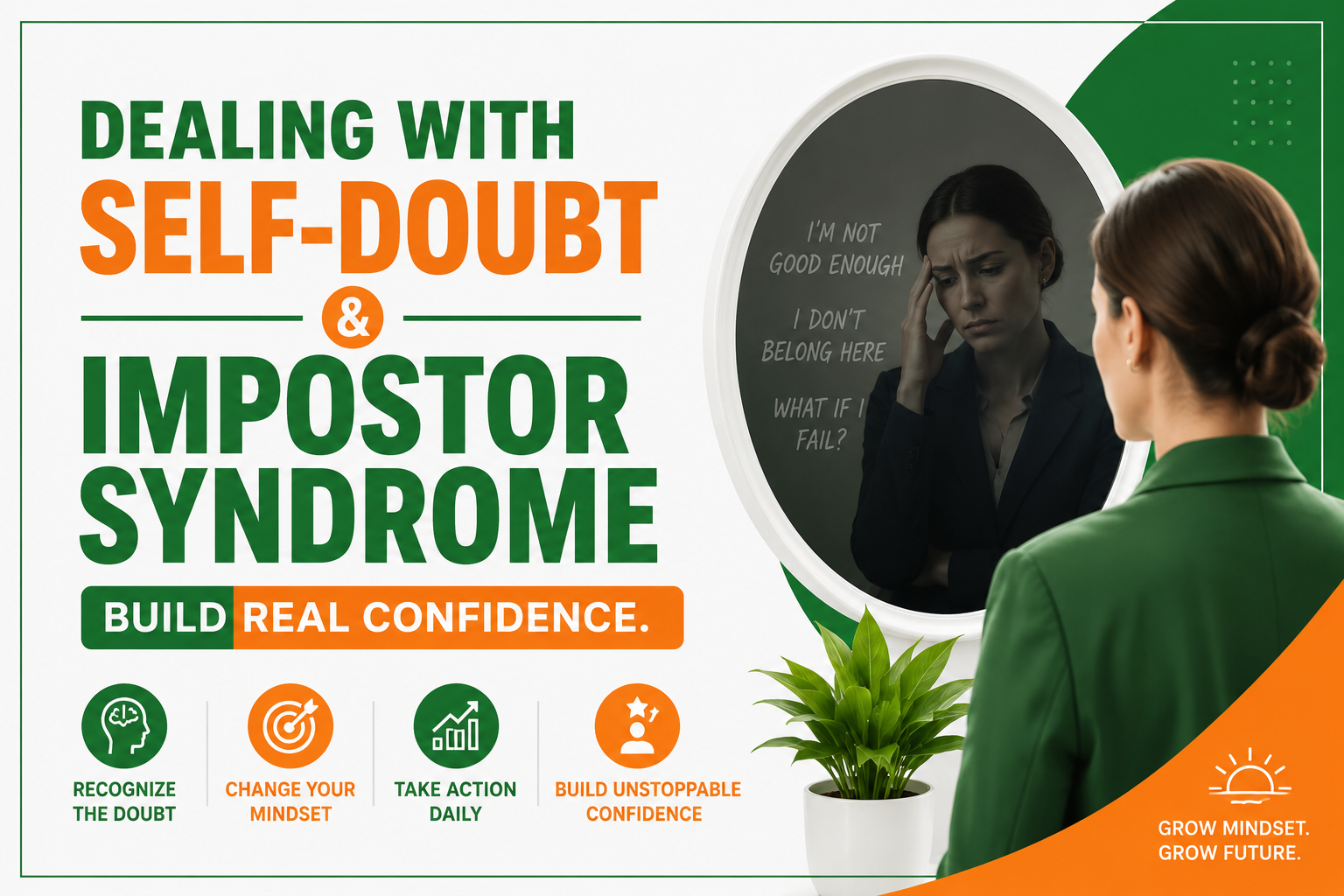
Have you ever achieved something important — landed a job, launched a business, earned a promotion, completed a project — and instead of feeling proud, your first thought was:
“What if I’m not actually good enough?”
Maybe you worry people will eventually “find out” you’re not as capable as they think. Maybe compliments make you uncomfortable. Maybe you constantly compare yourself to others who seem more talented, more confident, or more successful.
If this sounds familiar, you’re not alone.
Many highly capable people secretly struggle with impostor syndrome and chronic self-doubt, even when there’s clear evidence of their competence. Students feel it before exams. Entrepreneurs feel it before launching. Creatives feel it when sharing their work. Professionals feel it in meetings, interviews, and leadership roles.
The problem is not always a lack of ability.
Often, it’s a distorted relationship with your own value, competence, and identity.
This article will help you understand the psychology behind impostor syndrome, recognize the patterns keeping you stuck, and develop healthier, more resilient confidence rooted in action, self-awareness, and emotional growth.
What Is Impostor Syndrome?
Understanding Impostor Syndrome
Impostor syndrome is a psychological pattern where people doubt their abilities, minimize their accomplishments, and fear being exposed as a “fraud” despite evidence of competence or success.
People experiencing impostor syndrome often believe:
- Their success is due to luck
- Others overestimate their abilities
- They are not truly qualified
- They need to work harder than everyone else to prove themselves
- Failure would expose their “real” inadequacy
Although impostor syndrome is not classified as a formal mental disorder, it is widely recognized in psychology and personal development discussions because of how strongly it affects confidence, performance, and emotional well-being.
Common Signs of Impostor Syndrome
Here are some common indicators:
- Constantly doubting your abilities
- Feeling “not good enough”
- Struggling to accept praise
- Overpreparing for tasks
- Fear of making mistakes
- Comparing yourself excessively
- Avoiding opportunities due to fear
- Attributing success to luck
- Feeling anxious despite achievements
Humility vs Chronic Self-Doubt
Healthy humility says:
“I still have things to learn.”
Chronic self-doubt says:
“I’m probably not capable.”
Humility allows growth.
Impostor syndrome prevents people from recognizing their growth at all.
Why High Achievers Often Experience Impostor Syndrome
Ironically, ambitious and capable people are often more vulnerable to impostor syndrome because:
- They set extremely high standards
- They compare themselves to top performers
- They constantly enter new growth environments
- They fear losing success once they achieve it
Growth often exposes people to uncertainty, and uncertainty can trigger self-doubt.
The Psychological Roots of Self-Doubt
Understanding the roots of self-doubt helps reduce shame around it.
These patterns rarely appear randomly.
Fear of Failure
Many people develop self-doubt because they associate mistakes with rejection, embarrassment, or worthlessness.
Instead of seeing failure as feedback, they see it as proof they are inadequate.
This creates paralysis.
Fear of Judgment
Humans naturally want social acceptance.
When people become overly dependent on external approval, they may avoid risks, visibility, or leadership because criticism feels emotionally threatening.
Childhood Conditioning
Some people grew up in environments where:
- Achievement determined worth
- Mistakes were heavily criticized
- Praise was inconsistent
- Comparison was common
Over time, they internalized the belief:
“I must perform perfectly to deserve approval.”
Perfectionism
Perfectionism often disguises itself as ambition.
But underneath perfectionism is usually fear:
- Fear of criticism
- Fear of inadequacy
- Fear of losing control
Perfectionists often move goalposts endlessly, making confidence impossible to sustain.
Comparison Culture
Modern culture constantly encourages comparison.
Social media exposes people to curated highlights of:
- Wealth
- Beauty
- Success
- Productivity
- Confidence
People compare their private struggles to other people’s public victories.
That comparison is emotionally exhausting.
Negative Self-Talk
Over time, repeated thoughts become internal beliefs.
Examples include:
- “I always mess things up.”
- “I’m behind in life.”
- “Everyone else knows what they’re doing.”
- “I’m not smart enough.”
These thoughts shape emotional reality, even when they’re inaccurate.
Common Types of Impostor Syndrome
Not everyone experiences impostor syndrome the same way.
The Perfectionist
This person believes:
“If it’s not flawless, it’s failure.”
They:
- Obsess over mistakes
- Fear criticism
- Struggle to celebrate progress
The Expert
The expert believes they must know everything before taking action.
They:
- Constantly seek more certifications or preparation
- Fear being exposed as inexperienced
- Avoid opportunities unless fully qualified
The Soloist
The soloist believes asking for help means weakness.
They:
- Overwork themselves
- Avoid collaboration
- Attach self-worth to independence
The Natural Genius
This person believes competence should come effortlessly.
When something becomes difficult, they assume:
“Maybe I’m not actually talented.”
The Superhuman
The superhuman tries to excel in every area simultaneously.
They tie worth to productivity and achievement, often leading to burnout.
How Self-Doubt Affects Careers, Business, and Relationships
Unchecked impostor syndrome can quietly limit growth.
Missed Opportunities
People often avoid:
- Promotions
- Leadership roles
- Public speaking
- New businesses
- Career changes
Not because they lack ability — but because they doubt themselves.
Undervaluing Skills
Many freelancers, creatives, and professionals undercharge because they don’t believe their expertise is valuable enough.
Burnout
People with impostor syndrome often overwork to “earn” legitimacy.
This creates exhaustion without emotional satisfaction.
Avoiding Visibility
Some people stay invisible because visibility feels risky.
They:
- Avoid sharing ideas
- Stay quiet in meetings
- Hesitate to market themselves
Difficulty Accepting Praise
Compliments may trigger discomfort because they conflict with internal beliefs of inadequacy.
Practical Strategies for Overcoming Impostor Syndrome
Recognizing Negative Thought Patterns
You cannot change thoughts you do not notice.
Start identifying distorted thinking patterns such as:
- Catastrophizing
- All-or-nothing thinking
- Mind reading
- Discounting achievements
Practical Exercise
Write down recurring self-critical thoughts and ask:
- Is this objectively true?
- What evidence contradicts this?
- Would I say this to someone I care about?
Awareness creates psychological distance.
Reframing Internal Dialogue
Your internal voice matters.
Many people speak to themselves with a level of harshness they would never use toward others.
Replace:
- “I’m a failure.”
With: - “I’m learning through difficulty.”
Replace:
- “I’m not ready.”
With: - “I can improve while taking action.”
Healthy self-talk is not fake positivity.
It is balanced realism.
Tracking Evidence of Competence
Self-doubt often ignores evidence.
Create an “evidence journal” where you track:
- Wins
- Positive feedback
- Lessons learned
- Skills developed
- Challenges overcome
When insecurity rises, review the evidence instead of relying only on emotions.
Taking Action Before Feeling Fully Ready
One of the biggest confidence myths is:
“Confidence comes before action.”
In reality, confidence usually comes after repeated action.
You build confidence by:
- Trying
- Learning
- Adapting
- Surviving discomfort
Not by waiting to feel fearless.
Small Action Strategy
Instead of focusing on huge leaps:
- Send the proposal
- Post the content
- Attend the interview
- Launch the project
- Speak in the meeting
Small repeated action weakens fear over time.
Reducing Comparison
Comparison becomes destructive when it shifts from inspiration to self-rejection.
Healthy Benchmarking Looks Like:
- Learning from others
- Studying strategies
- Finding motivation
Unhealthy Comparison Looks Like:
- Feeling inferior
- Obsessing over timelines
- Measuring worth against others
Protect your mental space by:
- Curating your social media
- Reducing exposure to toxic comparison
- Focusing on personal progress
Accepting Imperfection
Perfection is not the requirement for growth.
People grow through:
- Mistakes
- Feedback
- Practice
- Iteration
A personal growth mindset understands that ability develops over time.
Imperfection is part of the process, not evidence of failure.
Seeking Mentorship and Community
Isolation magnifies self-doubt.
Supportive environments help normalize struggle and provide perspective.
Talk to:
- Mentors
- Trusted peers
- Coaches
- Communities
- Therapists when necessary
Often, hearing others share similar insecurities reduces shame dramatically.
Confidence vs Competence
Many people confuse confidence with competence.
Competence Comes First
Confidence grows from:
- Experience
- Skill development
- Practice
- Exposure
- Repetition
You rarely feel fully confident before starting something unfamiliar.
Why Waiting to Feel Ready Keeps People Stuck
If you wait for total certainty:
- You delay growth
- Fear gains control
- Opportunities pass
Action creates evidence.
Evidence strengthens self-belief.
That is how confidence develops.
The Role of Social Media and Modern Culture
Modern culture intensifies impostor syndrome in powerful ways.
Curated Success Online
People rarely post:
- Failures
- Anxiety
- Rejection
- Doubt
- Financial struggles
You mostly see polished outcomes.
This creates unrealistic expectations about how success “should” look.
External Validation Addiction
Likes, followers, and attention can make people dependent on external approval for self-worth.
The danger is:
- Confidence becomes unstable
- Identity becomes performance-based
Unrealistic Productivity Culture
Modern culture often glorifies:
- Hustle
- Constant achievement
- Perfection
- Hyper-productivity
This can make ordinary human struggles feel like personal failures.
Common Mistakes People Make When Battling Self-Doubt
1. Isolating Themselves
Silence strengthens shame.
2. Overpreparing Endlessly
Preparation becomes avoidance when people never actually begin.
3. Seeking Constant Validation
External reassurance provides temporary relief but rarely builds lasting self-belief.
4. Ignoring Achievements
Some people instantly dismiss accomplishments instead of internalizing them.
5. Quitting Too Early
Growth often feels uncomfortable before it feels rewarding.
Practical Daily Habits for Building Confidence
Confidence is usually built through consistent daily behaviors.
1. Journaling
Write about:
- Emotions
- Progress
- Lessons learned
- Challenges overcome
Reflection increases self-awareness.
2. Skill Development
Competence strengthens confidence.
Invest in learning consistently.
3. Exercise and Physical Care
Physical health affects:
- Mood
- resilience
- stress management
- confidence levels
Movement supports emotional resilience.
4. Daily Self-Review
At the end of each day, ask:
- What did I handle well?
- What did I learn?
- What progress did I make?
5. Tracking Small Wins
Small wins matter psychologically.
Progress compounds over time.
Real-Life Example: How Ada Gradually Overcame Impostor Syndrome
Ada recently transitioned into a project management role after years of administrative work.
Despite earning the promotion, she constantly feared she wasn’t qualified enough. She overworked, avoided speaking in meetings, and spent hours double-checking every task.
When colleagues praised her work, she dismissed it internally:
“They probably just don’t realize I’m struggling.”
Eventually, burnout forced her to reflect.
She began:
- Tracking achievements weekly
- Asking for mentorship
- Reducing perfectionist habits
- Challenging negative self-talk
- Taking action despite fear
The change was gradual, not instant.
Months later, she still experienced moments of self-doubt — but she no longer treated those feelings as proof of incompetence.
Instead, she recognized them as emotional reactions, not objective truth.
That shift changed everything.
Expert Tips for Developing Long-Term Self-Belief
Separate Feelings From Facts
Feeling insecure does not automatically mean you are incapable.
Focus on Progress, Not Identity
Avoid labeling yourself negatively.
Instead of:
“I’m terrible at this.”
Try:
“I’m improving through practice.”
Build Emotional Resilience
Confidence is not the absence of fear.
It is the ability to continue despite discomfort.
Develop Internal Validation
External praise feels good, but sustainable confidence comes from self-respect and personal integrity.
Stop Expecting Permanent Confidence
Even experienced professionals feel uncertain sometimes.
Confidence is dynamic, not constant.
Finally,
Experiencing impostor syndrome does not mean you are weak, unintelligent, or incapable.
It means you are human.
Many talented people struggle silently with self-doubt, fear of failure, and the pressure to prove themselves constantly. The goal is not to eliminate uncertainty forever. The goal is to build healthier thinking patterns, stronger emotional resilience, and enough self-trust to keep moving forward anyway.
You do not need perfect confidence before taking action.
You need willingness.
Growth often begins the moment you stop asking:
“What if I’m not good enough?”
And start asking:
“What could happen if I trusted myself enough to try?”
Your doubts may speak loudly sometimes.
But they do not get the final decision.