Building a Career Roadmap for Long-Term Success

In today’s fast-changing economy, one of the biggest career mistakes professionals make is treating their careers like a series of random opportunities instead of a long-term strategy.
A job offer appears. They take it.
A trend becomes popular. They follow it.
A friend changes industries. They do the same.
Then suddenly, five years pass — and they realize they’ve been busy without actually progressing.
The reality is this: successful professionals rarely grow by accident. Behind most sustainable success stories is a deliberate career roadmap — a strategic plan that guides decisions, skill development, opportunities, and long-term growth.
Whether you are a fresh graduate, a mid-career professional, a freelancer, an entrepreneur, or someone considering a career pivot, building a long-term career strategy can help you avoid stagnation and create intentional progress.
This guide will show you exactly how to create a practical, adaptable, and future-focused career roadmap for the next 5–10 years.
What Is a Career Roadmap?
A career roadmap is a structured long-term plan that outlines where you want your professional life to go and how you intend to get there.
It helps you answer questions like:
- What kind of work do I want to do long term?
- What skills should I build?
- What industries offer future opportunities?
- What milestones should I achieve in the next 1, 3, 5, or 10 years?
- How can I stay competitive in a changing market?
A career roadmap is different from simply setting career goals.
Career Goals vs Career Strategy
Career Goals
Goals are outcomes you want to achieve.
Examples:
- Get promoted
- Earn a higher salary
- Become a manager
- Start a business
Career Strategy
A strategy explains how you will achieve those goals sustainably.
It includes:
- Skill acquisition
- Networking
- Financial planning
- Industry positioning
- Personal branding
- Long-term adaptability
A strong career development plan combines both goals and strategy.
In today’s economy — where automation, AI, remote work, and economic uncertainty constantly reshape industries — long-term planning is no longer optional. It is a survival skill.
Why Most People Struggle With Career Planning
Many professionals want career growth, but few build an intentional career progression plan.
Here’s why.
1. Lack of Clarity
Many people don’t truly understand:
- Their strengths
- Their interests
- Their values
- Their ideal work environment
Without self-awareness, career decisions become reactive instead of strategic.
2. Short-Term Thinking
Some professionals focus only on:
- Immediate salary
- Quick opportunities
- Job titles
- Temporary trends
But long-term success often requires patience and strategic positioning.
3. Fear of Change
People stay in unfulfilling careers because:
- They fear uncertainty
- They doubt themselves
- They worry about starting over
Unfortunately, avoiding change can lead to long-term stagnation.
4. Following Trends Blindly
Not every popular career path is suitable for everyone.
A profession may be profitable but still misaligned with your personality, strengths, or lifestyle goals.
5. Limited Mentorship
Many professionals lack access to:
- Career guidance
- Industry insights
- Strategic advice
- Accountability
Without mentors, people often repeat avoidable mistakes.
6. Poor Self-Awareness
Some professionals overestimate their readiness while others underestimate their potential.
Both extremes can damage long-term growth.
Step 1: Define Your Long-Term Career Vision
Every effective career roadmap starts with clarity.
Before planning the next 5–10 years, you need to define what success means to you personally.
Identify Your Strengths and Interests
Ask yourself:
- What work energizes me?
- What problems do I enjoy solving?
- What skills come naturally to me?
- What type of work environment suits me best?
Your long-term career should ideally sit at the intersection of:
- Skill
- Passion
- Opportunity
- Profitability
Clarify Lifestyle Goals
Career success is not just about money.
Consider:
- Work-life balance
- Flexibility
- Remote work opportunities
- Family goals
- Travel aspirations
- Financial independence
Your career should support the life you want to live.
Define Success Personally
Avoid copying someone else’s definition of success.
For some people, success means:
- Executive leadership
- Entrepreneurship
- Creative freedom
- Financial security
- Industry influence
- Geographic flexibility
Your roadmap should reflect your values.
Choose Industries Strategically
When planning your future career planning, focus on industries with long-term growth potential such as:
- Technology
- AI
- Digital marketing
- Healthcare
- Renewable energy
- Data analytics
- Cybersecurity
- Finance
- Remote service industries
Look for industries that combine:
- Stability
- Growth
- Adaptability
Step 2: Assess Your Current Position
You cannot build a realistic career growth plan without understanding your starting point.
Conduct a personal career audit.
Evaluate Your Current Skills
List:
- Technical skills
- Soft skills
- Leadership abilities
- Digital skills
- Industry knowledge
Then identify which skills are:
- Strong
- Average
- Missing entirely
Assess Your Experience Level
Ask:
- What experience do employers value in my industry?
- What experience am I currently lacking?
- What projects can strengthen my profile?
Review Your Financial Situation
Career development often requires investment.
Consider:
- Certifications
- Courses
- Conferences
- Relocation
- Equipment
- Business startup capital
Financial awareness helps you plan strategically.
Analyze Your Professional Network
Your network can influence:
- Job opportunities
- Mentorship
- Partnerships
- Visibility
- Referrals
Ask yourself:
- Do I know people in my target industry?
- Am I visible professionally?
- Am I building meaningful relationships?
Identify Skill Gaps
This is one of the most important parts of any professional development roadmap.
Research:
- Industry demands
- Future trends
- Employer expectations
- Emerging technologies
Then identify the gap between where you are and where you want to be.
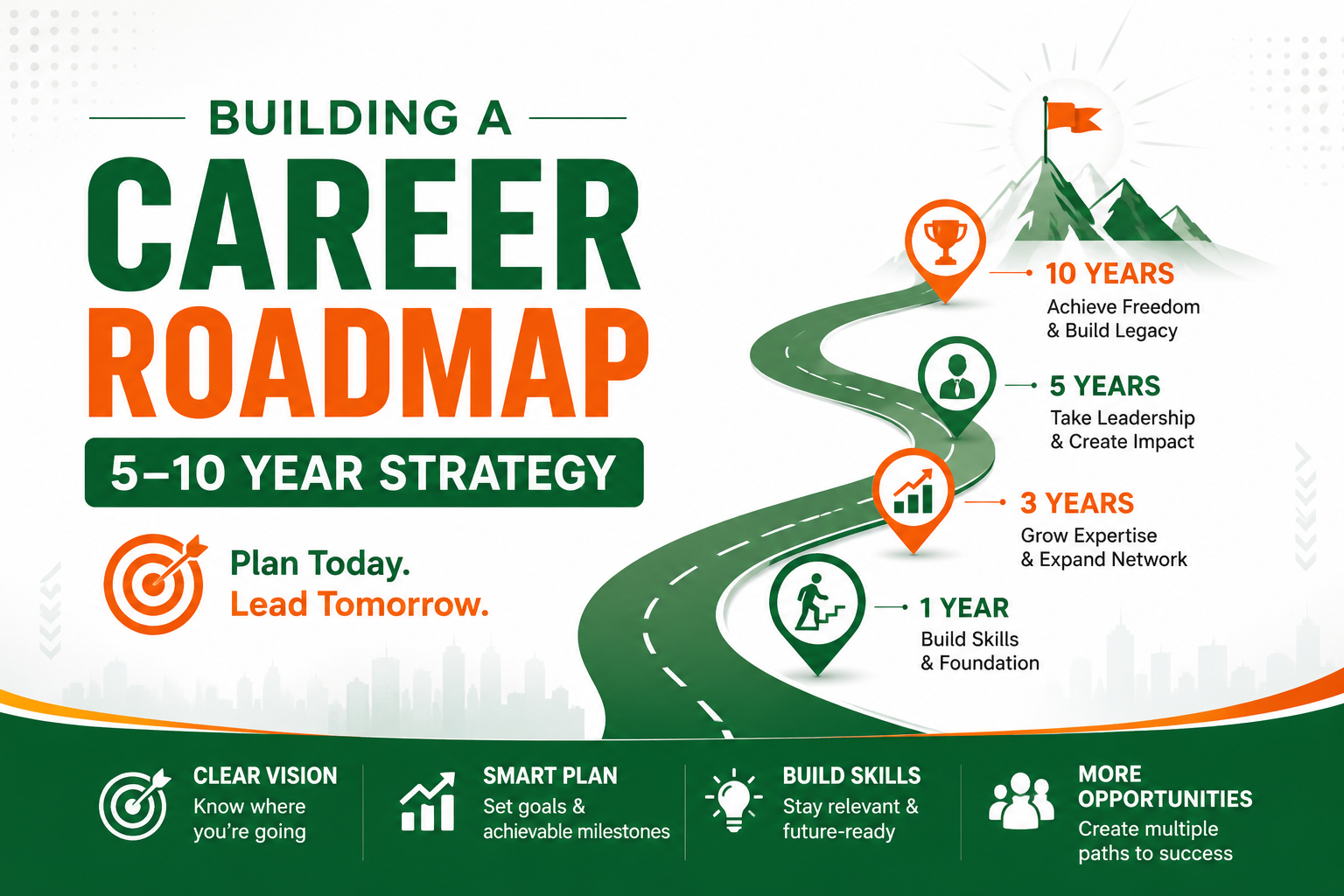
Step 3: Create a 5–10 Year Career Roadmap
Now it’s time to structure your long-term plan.
Break your roadmap into realistic milestones.
1-Year Goals
Focus on building momentum.
Examples:
- Complete certifications
- Improve communication skills
- Build a portfolio
- Gain industry experience
- Learn digital tools
- Optimize LinkedIn
- Increase income
Example:
A marketing graduate may aim to:
- Learn SEO
- Run small ad campaigns
- Build a personal website
- Secure internships or freelance clients
3-Year Goals
Focus on specialization and credibility.
Examples:
- Become a team lead
- Build industry expertise
- Increase professional visibility
- Expand income streams
- Build strong industry relationships
Example:
A software developer may aim to:
- Become a senior developer
- Lead projects
- Build open-source contributions
- Earn cloud certifications
5-Year Goals
Focus on influence and leadership.
Examples:
- Become a manager
- Launch a business
- Build authority in your field
- Achieve financial stability
- Transition into consulting
Example:
A content creator may:
- Build a personal brand
- Create digital products
- Develop multiple revenue streams
- Build a small team
10-Year Vision
Think bigger.
Your long-term vision could include:
- Executive leadership
- Entrepreneurship
- Global opportunities
- Financial independence
- Industry recognition
- Thought leadership
This stage is about legacy, impact, and long-term fulfillment.
Step 4: Build the Skills You’ll Need
Your career can only grow to the level of your skills.
A strong career development plan prioritizes continuous learning.
Technical Skills
These are industry-specific skills.
Examples:
- Coding
- SEO
- Financial analysis
- UX design
- Data analytics
- Video editing
- AI tools
Soft Skills
Soft skills increasingly determine leadership potential.
Key skills include:
- Emotional intelligence
- Communication
- Problem-solving
- Collaboration
- Adaptability
- Time management
Leadership Skills
Even if you are not a manager today, leadership skills matter.
Develop:
- Decision-making
- Delegation
- Strategic thinking
- Conflict resolution
- Team management
Digital Literacy
Every industry is becoming digital.
Professionals who resist technology risk becoming obsolete.
Learn:
- Productivity tools
- Automation platforms
- AI systems
- Remote collaboration tools
AI and Future-Proof Skills
AI is changing the workforce rapidly.
Future-proof professionals should learn:
- AI-assisted workflows
- Prompt engineering
- Data interpretation
- Critical thinking
- Human-centered problem solving
The future belongs to professionals who can combine technology with human creativity.
Commit to Continuous Learning
Learning should become a lifestyle.
Use:
- Online courses
- Certifications
- Industry webinars
- Podcasts
- Books
- Workshops
- Mentorship programs
Step 5: Develop Strategic Relationships
Your network can accelerate your career goals strategy significantly.
Network Intentionally
Networking is not about collecting contacts.
It’s about building genuine professional relationships.
Focus on:
- Industry peers
- Mentors
- Recruiters
- Decision-makers
- Collaborators
Find Mentors
A mentor can help you:
- Avoid mistakes
- Gain clarity
- Access opportunities
- Improve confidence
- Think strategically
Seek mentors whose career path aligns with your goals.
Build Professional Credibility
Become known for:
- Reliability
- Competence
- Professionalism
- Consistency
Your reputation is part of your career capital.
Leverage LinkedIn
LinkedIn is now a major professional visibility platform.
Use it to:
- Share insights
- Build authority
- Connect with professionals
- Showcase achievements
- Discover opportunities
Join Industry Communities
Participate in:
- Conferences
- Online groups
- Webinars
- Professional associations
- Mastermind groups
Visibility creates opportunity.
Step 6: Create Multiple Career Opportunities
Modern professionals should avoid depending on a single income source or career path.
A smart long-term career strategy includes diversification.
Build a Personal Brand
Your online presence matters.
Share:
- Expertise
- Experiences
- Lessons
- Projects
- Industry insights
People trust visible professionals.
Start Side Projects
Side projects help you:
- Build skills
- Test ideas
- Expand your portfolio
- Generate extra income
Explore Freelancing
Freelancing can:
- Increase income
- Expand experience
- Build independence
- Create global opportunities
Develop Passive Income Streams
Examples:
- Digital products
- Courses
- Consulting
- Affiliate marketing
- Content monetization
Build a Portfolio
A strong portfolio demonstrates competence better than words alone.
Include:
- Projects
- Case studies
- Testimonials
- Results
- Certifications
Common Career Roadmap Mistakes
Avoid these common traps.
Comparing Yourself to Others
Everyone’s timeline is different.
Focus on strategic progress instead of unhealthy comparison.
Ignoring Industry Trends
Industries evolve quickly.
Stay informed about:
- AI
- Automation
- Remote work
- Market demands
- Economic shifts
Refusing to Upgrade Skills
Outdated skills reduce career opportunities.
Learning must be continuous.
Poor Financial Planning
Career transitions often require financial preparation.
Build savings and invest wisely.
Waiting for Motivation
Successful professionals rely more on discipline than motivation.
Consistency compounds over time.
Fear of Taking Risks
Strategic risks often create major breakthroughs.
Avoid reckless decisions, but don’t let fear paralyze growth.
How to Stay Flexible in a Changing Job Market
A modern career roadmap must remain adaptable.
The world changes too fast for rigid plans.
Embrace Adaptability
Your career path may evolve several times.
That is normal.
Commit to Lifelong Learning
The ability to learn quickly is becoming more valuable than static knowledge.
Prepare for Career Pivots
Career changes are increasingly common.
Professionals may transition between:
- Industries
- Roles
- Business models
- Work environments
Understand Technology Disruption
Technology will continue reshaping jobs.
Rather than resisting change, learn how to work alongside emerging technologies.
Reinvent Yourself When Necessary
Reinvention is not failure.
It is strategic evolution.
Real-Life Career Roadmap Example
Consider Ada, a university graduate who started as a customer service representative.
Year 1
She focused on:
- Communication skills
- Digital marketing certifications
- LinkedIn optimization
- Freelance projects
Year 3
She transitioned into digital marketing full-time and:
- Built a strong portfolio
- Managed campaigns
- Expanded her network
- Increased her income significantly
Year 5
She became a marketing manager and:
- Led teams
- Spoke at industry events
- Started consulting part-time
Year 10
She launched her own digital marketing agency and built multiple income streams through:
- Consulting
- Courses
- Content creation
- Agency services
Her growth was not accidental.
It was intentional, strategic, and consistent.
Expert Tips for Accelerating Career Growth
1. Focus on High-Income Skills
Learn skills with strong market demand.
2. Become Visible
Opportunities often go to professionals who are seen consistently.
3. Track Your Progress
Review your roadmap every 6–12 months.
4. Learn Business Thinking
Even employees benefit from understanding:
- Revenue
- Strategy
- Customer psychology
- Operations
5. Improve Communication
Communication remains one of the highest-paying career skills globally.
6. Build Career Resilience
Avoid depending on:
- One employer
- One platform
- One income source
7. Think Long-Term
Short-term sacrifices often create long-term rewards.
In conclusion,
Behind every sustainable success is a clear vision, strategic planning, continuous learning, and intentional action.
Creating a long-term career roadmap allows you to:
- Make smarter decisions
- Build relevant skills
- Increase career security
- Adapt to change
- Create meaningful professional growth
You do not need to have every detail figured out today.
What matters most is starting with clarity, building momentum, and remaining adaptable as opportunities evolve.
The next 5–10 years will pass whether you plan for them or not.
The question is: will your future career be accidental or intentional?