Business Incubation Programme (BIP)

About Course
The Business Incubation Programme is a practical enterprise development programme designed to help aspiring entrepreneurs, nano-traders and early-stage business owners build, structure, launch and grow sustainable businesses.
The programme provides participants with practical knowledge and tools for identifying viable business opportunities, developing business models, planning and budgeting, establishing appropriate business structures, managing early-stage challenges, and developing strategies for business survival, growth and scale.
Through practical learning, coaching, mentorship and guided assignments, participants will develop a clear business roadmap tailored to their stage of development—whether they are preparing to start, currently operating a small business, or struggling to achieve sustainable growth.
The programme is particularly relevant to businesses and aspiring entrepreneurs in areas such as Agribusiness, Fashion Design, Green Energy & Solar Technology, Beauty & Cosmetics, and other viable enterprise sectors.
What Will You Learn?
- 1. Identify and assess viable business opportunities based on market needs and available resources.
- 2. Develop and structure a practical business model for your enterprise.
- 3. Develop a clear business startup strategy and realistic implementation budget.
- 4. Establish appropriate business structures, systems and processes for effective operations.
- 5. Understand how to manage common challenges faced by early-stage and struggling businesses.
- 6. Develop a practical Survival-to-Scale Strategy for stabilising and strengthening an existing business.
- 7. Identify opportunities for business growth, expansion and market development.
- 8. Develop a practical roadmap for launching, managing and growing your business.
- 9. Apply basic entrepreneurial and business management principles to day-to-day decision-making.
- 10. Prepare your business for mentorship, partnerships, funding and other growth opportunities.
Course Content
MODULE 1: Founder Readiness & Entrepreneurial Mindset
-
Lesson 1: Understanding Entrepreneurship & Venture Building
-
Lesson 2: The Difference Between an Idea, Business and Venture
-
Lesson 3: Entrepreneurial Mindset & Founder Psychology
-
Lesson 4: Founder Motivation: Why Do You Want to Build This?
-
Lesson 5: Entrepreneurial Discipline, Consistency & Execution
-
Lesson 6: Risk-Taking, Uncertainty & Decision-Making
-
Lesson 7: Resilience, Failure & Learning From Feedback
-
Lesson 8: Founder Strengths, Weaknesses & Capability Assess
-
Lesson 9: Time, Commitment & Resource Management
-
Lesson 10: Founder Ethics, Integrity & Responsibility
MODULE 2: Idea Screening & Opportunity Assessment
-
Lesson 1: What Makes a Business Idea Viable?
-
Lesson 2: Identifying Business Opportunities
-
Lesson 3: Opportunity vs. Wishful Thinking
-
Lesson 4: Market Need vs. Personal Interest
-
Lesson 6: Market Opportunity Assessment
-
Lesson 5: Problem Severity & Customer Urgency
-
Lesson 7: Resource Requirements
-
Lesson 8: Revenue Potential
-
Lesson 9: Scalability & Replicability
-
Lesson 10: Risk Assessment
-
Lesson 11: Social & Economic Impact Potential
-
Lesson 12: Idea Feasibility Scoring
MODULE 3: Problem Identification & Problem Validation
-
Lesson 1: Understanding the Problem-Solution Relationship
-
Lesson 2: Defining the Core Problem
-
Lesson 3: Symptoms vs. Root Problems
-
Lesson 4: Developing Problem Statements
-
Lesson 5: Identifying Who Experiences the Problem
-
Lesson 6: Problem Frequency, Severity & Urgency
-
Lesson 7: Existing Alternatives to the Problem
-
Lesson 8: Developing Problem Hypotheses
-
Lesson 8: Developing Problem Hypotheses
-
Lesson 9: Designing Problem Validation Experiments
-
Lesson 10: Conducting Problem Interviews
-
Lesson 11: Analysing Validation Evidence
-
Lesson 12: Pivot, Persevere or Abandon
MODULE 4: Customer Discovery & Market Research
-
Lesson 1: Understanding Your Customer
-
Lesson 2: Customer Segmentation
-
Lesson 3: Developing an Ideal Customer Profile (ICP)
-
Lesson 4: Buyer vs. User vs. Decision Maker
-
Lesson 5: Developing Customer Personas
-
Lesson 6: Customer Interviews
-
Lesson 7: Surveys & Questionnaires
-
Lesson 8: Primary vs. Secondary Market Research
-
Lesson 8: Primary vs. Secondary Market Research
-
Lesson 9: Market Trends & Industry Analysis
-
Lesson 10: Estimating Market Size
-
Lesson 11: Understanding TAM, SAM & SOM
-
Lesson 12: Customer Pain Points & Buying Be
-
Lesson 13: Analysing Market Evidence
-
Lesson 14: Developing Customer Insights
MODULE 5: Solution Design & Value Proposition
-
Lesson 1: From Problem to Solution
-
Lesson 2: Solution Ideation
-
Lesson 3: Design Thinking for Entrepreneurs
-
Lesson 4: Defining the Core Solution
-
Lesson 5: Features vs. Benefits
-
Lesson 6: Understanding Customer Value
-
Lesson 7: Developing a Unique Value Proposition
-
Lesson 8: The Value Proposition Canvas
-
Lesson 9: Differentiation
-
Lesson 10: Testing the Value Proposition
-
Lesson 11: Refining the Solution From Customer Feedback
MODULE 6: Business Model Development
-
Lesson 1: What Is a Business Model?
-
Lesson 2: Introduction to the Business Model Canvas
-
Lesson 3: Customer Segments
-
Lesson 4: Value Propositions
-
Lesson 5: Channels
-
Lesson 6: Customer Relationships
-
Lesson 7: Revenue Streams
-
Lesson 8: Key Resources
-
Lesson 9: Key Activities
-
Lesson 10: Key Partnerships
-
Lesson 11: Cost Structure
-
Lesson 12: Testing the Business Model
-
Lesson 13: Identifying Business Model Risks
-
Lesson 14: Business Model Innovation
MODULE 7: Competitive Analysis & Market Positioning
-
Lesson 1: Understanding Competition
-
Lesson 2: Business Registration in Nigeria
-
Lesson 3: CAC & Business Name Considerations
-
Lesson 4: Tax & Statutory Obligations
-
Lesson 5: Licences, Per
-
Lesson 6: Contracts & Business Agreements
-
Lesson 7: Intellectual Property
-
Lesson 8: Trademarks & Brand Protection
-
Lesson 9: Data Protection & Privacy
-
Lesson 10: Consumer Protection
-
Lesson 11: Employment & Contractor Considerations
-
Lesson 12: Regulatory Risk
-
Lesson 13: Compliance Documentation
MODULE 8: Product/Service Development & MVP
-
Lesson 1: Product Development Fundamentals
-
Lesson 2: Service Design Fundamentals
-
Lesson 3: Understanding the Minimum Viable Product (MVP)
-
Lesson 4: MVP vs. Prototype vs. Proof of Concept
-
Lesson 5: Identifying the Core MVP
-
Lesson 6: Feature Prioritisation
-
Lesson 7: Customer Journey Mapping
-
Lesson 8: User Experience Fundamentals
-
Lesson 9: Prototype Development
-
Lesson 10: Testing the Prototype
-
Lesson 11: Collecting User Feedback
-
Lesson 12: Iteration & Improvement
-
Lesson 13: MVP Costing
-
Lesson 14: MVP Launch Readiness
MODULE 9: Business Structure, Legalisation & Compliance
-
Lesson 1: Choosing the Right Business Structure
-
Lesson 2: Business Registration in Nigeria
-
Lesson 3: CAC & Business Name Considerations
-
Lesson 4: Tax & Statutory Obligations
-
Lesson 5: Licences, Permits & Sector Requirements
-
Lesson 6: Contracts & Business Agreements
-
Lesson 7: Intellectual Property
-
Lesson 8: Trademarks & Brand Protection
-
Lesson 9: Data Protection & Privacy
-
Lesson 10: Consumer Protection
-
Lesson 11: Employment & Contractor Considerations
-
Lesson 12: Regulatory Risk
-
Lesson 13: Compliance Documentation
-
Lesson 14: Building a Legally Responsible Business
MODULE 10: Operations & Business Systems
-
Lesson 1: Understanding Business Operations
MODULE 10: Operations & Business Systems
-
Lesson 2: Designing Business Processes
-
Lesson 3: Standard Operating Procedures (SOPs)
-
Lesson 4: Procurement & Supplier Management
-
Lesson 5: Inventory Management
-
Lesson 6: Quality Control
-
Lesson 7: Customer Service Systems
-
Lesson 8: Business Record Keeping
-
Lesson 9: Technology & Digital Tools
-
Lesson 10: Workflow Automation
-
Lesson 11: Risk Management
-
Lesson 12: Business Continuity
-
Lesson 13: Outsourcing & Strategic Partnerships
-
Lesson 14: Building Systems That Can Scale
MODULE 11: Branding, Marketing & Digital Presence
-
Lesson 1: Understanding Branding
-
Lesson 2: Developing Brand Identity
-
Lesson 3: Brand Positioning
-
Lesson 4: Business Naming & Brand Architecture
-
Lesson 5: Developing Your Brand Story
-
Lesson 6: Visual Brand Identity
-
Lesson 7: Customer Trust & Business Credibility
-
Lesson 8: Developing a Marketing Strategy
-
Lesson 9: Digital Marketing Fundamentals
-
Lesson 10: Social Media Strategy
-
Lesson 11: Content Marketing
-
Lesson 12: Website & Landing Pages
-
Lesson 13: WhatsApp & Digital Customer Engagement
-
Lesson 14: Building an Online Presence
-
Lesson 15: Reputation Management
-
Lesson 16: Marketing Measurement & Analytics
MODULE 12: Pricing, Sales & Customer Acquisition
-
Lesson 1: Understanding Sales
-
Lesson 2: Sales vs. Marketing
-
Lesson 3: Customer Acquisition
-
Lesson 4: Building a Sales Funnel
-
Lesson 5: Lead Generation
-
Lesson 6: Prospecting
-
Lesson 7: Customer Qualification
-
Lesson 8: Conducting Sales Conversations
-
Lesson 9: Sales Presentations
-
Lesson 10: Handling Customer Objections
-
Lesson 11: Closing Sales
-
Lesson 12: Customer Onboarding
-
Lesson 13: Customer Retention
-
Lesson 14: Upselling & Cross-selling
-
Lesson 15: Building Referral Systems
-
Lesson 16: Sales Tracking & KPIs
MODULE 13: Financial Management & Business Planning
-
Lesson 1: Entrepreneurial Financial Literacy
-
Lesson 2: Separating Business & Personal Finance
-
Lesson 3: Calculating Startup Costs
-
Lesson 4: Fixed & Variable Costs
-
Lesson 5: Business Costing
-
Lesson 6: Pricing for Profitability
-
Lesson 7: Revenue Models
-
Lesson 8: Cash Flow Management
-
Lesson 9: Business Bookkeeping
-
Lesson 10: Understanding the Income Statement
-
Lesson 11: Understanding the Balance Sheet
-
Lesson 12: Understanding the Cash Flow Statement
-
Lesson 13: Break-even Analysis
-
Lesson 14: Financial Forecasting
-
Lesson 15: Business Budgeting
-
Lesson 16: Understanding Unit Economics
-
Lesson 17: Financial KPIs
-
Lesson 18: Building 3-Year Financial Projections
MODULE 14: Funding Strategy & Investment Readiness
-
Lesson 1: Understanding Business Funding
-
Lesson 2: Bootstrapping
-
Lesson 3: Friends & Family Capital
-
Lesson 4: Grants
-
Lesson 5: Loans & Debt Financing
-
Lesson 6: Angel Investment
-
Lesson 7: Venture Capital
-
Lesson 8: Strategic Investors
-
Lesson 9: Corporate Partnerships
-
Lesson 10: Revenue-Based Growth
-
Lesson 11: Choosing the Right Funding Source
-
Lesson 12: Determining Funding Requirements
-
Lesson 13: Calculating the Capital Needed
-
Lesson 14: Developing a Use-of-Funds Plan
-
Lesson 15: Understanding Investment Readiness
-
Lesson 16: Equity & Ownership
-
Lesson 17: Valuation Fundamentals
-
Lesson 18: Understanding Investment Terms
-
Lesson 19: Understanding Investor Expectations
-
Lesson 20: Grant Application Strategy
-
Lesson 21: Building a Funding Pipeline
-
Lesson 22: Avoiding Funding Scams & Bad Capital
MODULE 15: Go-to-Market, Launch & Growth Strategy
-
Lesson 1: Understanding Go-to-Market Strategy
-
Lesson 2: Choosing the Initial Market
-
Lesson 3: Market Entry Strategy
-
Lesson 4: Developing a Launch Plan
-
Lesson 5: Soft Launch
-
Lesson 6: Pilot Launch
-
Lesson 7: Grand Opening Launch
-
Lesson 8: Phased Launch
-
Lesson 9: Online/Digital Launch
-
Lesson 10: Distribution Strategy
-
Lesson 11: Sales Channels
-
Lesson 12: Customer Acquisition Strategy
-
Lesson 13: Partnership Strategy
-
Lesson 14: Growth Experiments
-
Lesson 15: Measuring Launch Performance
-
Lesson 16: Understanding Product-Market Fit
-
Lesson 17: Customer Retention & Loyalty
-
Lesson 18: Growth Strategy
-
Lesson 19: Market Expansion Strategy
-
Lesson 20: Building a 12-Month Growth Roadmap
MODULE 16: Pitch, Demo Day & Post-Incubation Growth
-
Lesson 1: Understanding Business Pitches
-
Lesson 2: Developing the Founder Story
-
Lesson 3: Building the Problem-Solution Narrative
-
Lesson 4: Building a Business Pitch
-
Lesson 5: Investor Pitch
-
Lesson 6: Grant Pitch
-
Lesson 7: Partnership Pitch
-
Lesson 8: Sales Pitch
-
Lesson 9: Competition Pitch
-
Lesson 10: Building a Pitch Deck
-
Lesson 11: Financial Storytelling
-
Lesson 12: Presenting Traction
-
Lesson 13: Presenting the Market Opportunity
-
Lesson 14: Presenting the Funding Ask
-
Lesson 15: Developing the Use-of-Funds Presentation
-
Lesson 16: Preparing for Investor Questions
-
Lesson 17: Understanding Due Diligence
-
Lesson 18: Pitch Delivery & Presentation Skills
-
Lesson 19: Handling Difficult Questions
-
Lesson 20: Mock Pitch Sessions
-
Lesson 21: Demo Day Preparation
-
Lesson 22: Post-Incubation Growth & Accountability
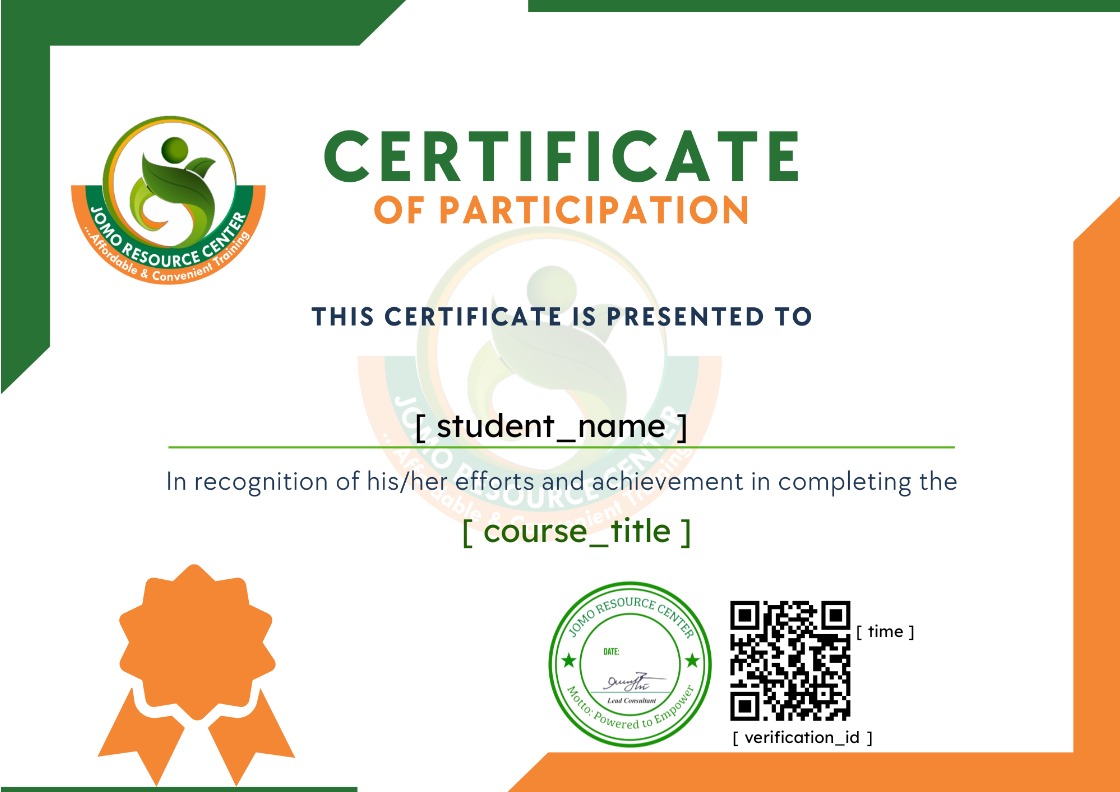
Earn a certificate
Add this certificate to your resume to demonstrate your skills & increase your chances of getting noticed.
Student Ratings & Reviews